
Throughout history, some arts have found in others new forms of inspiration. In my case, as a contemporary figurative painter, dance and, in a very particular way, certain scenes from cinema have always been a source of desire, emotion, and impulse to paint.
The dance scene as an unforgettable image
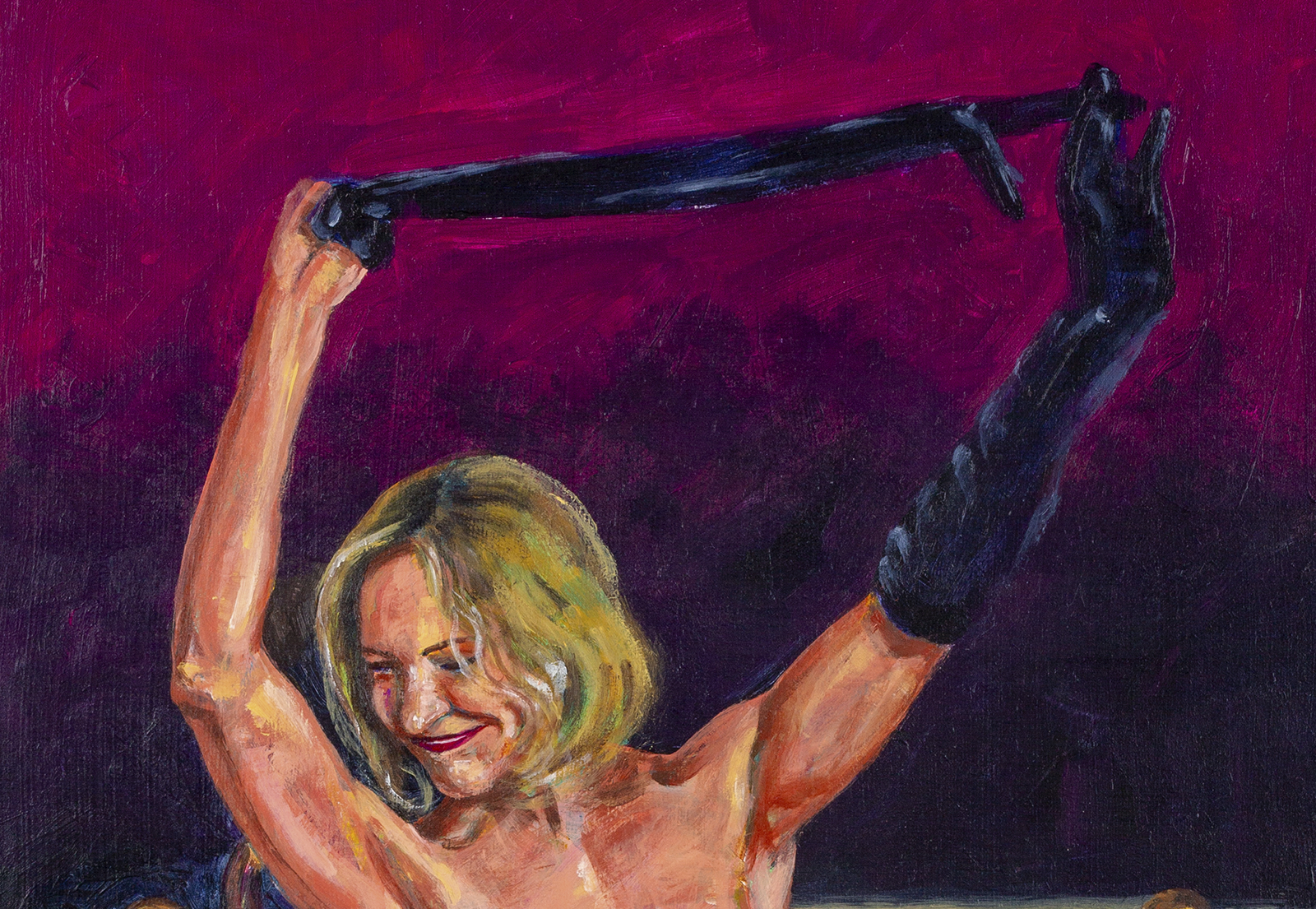
Bodies, movement, and an overflowing aesthetic have given rise to cinematic scenes that have become true cultural icons. For my series Erotic Homage to the Most Emblematic Dance Scenes in the History of Cinema, I chose scenes that left an indelible mark on me.
Each one responds to a different reason, yet they all share something: in their moment, or when I return to them through memory, they awaken desire in me. Sometimes because of their explicit erotic charge; at other times because of their evocative power, which urges me to reread them, replace their characters, and preserve the essential tension of their narrative.
This rereading opens a space the viewer can enter through their own memory. That is why, even when it begins from a shared image, each person arrives at a different reading. Each painting evokes and unfolds a personal story. It is the viewer who completes the work by reading it through their own unforgettable images.
The body in motion as a dramatic core
Rhythm, sensuality, strength, flexibility, expressiveness: the bodies of dancers impress through all of this. But what matters most is not only what they show, but what they say. Their gestures, their poses, and the way they occupy space build a visual narrative that goes far beyond beauty or physical skill.
In my paintings, that bodily eloquence shifts toward a vindicatory dimension of women’s sovereignty over their own bodies. The chosen poses of nude bodies in motion form the dramatic core of each of the stories I wanted to tell. By choosing iconic scenes, I want the viewer to remember the original plot from which the paintings depart and to understand why the nude bodies in my works replace those in the films without losing their narrative tension.
Sensuality, theatricality, and visual tension
Beyond their narrative value, these dance scenes gather cinematic resources that intensify rhythm, tension, and visual presence. Framing, editing, soundtrack, and performance combine to produce memorable images, capable of remaining attached to the viewer’s sensibility.
That theatricality does not disappear when I bring the scene into painting. It transforms. What happens in time in cinema remains suspended on the canvas. And that suspension allows me to charge the image with a different kind of tension: more intimate, more symbolic, more open to contemplation and personal reading.
When a frame becomes memory
Some scenes remain within us not only because of what they show, but because of the emotion with which they became tied to a moment in our lives. Then a frame ceases to be a simple fragment of film and becomes memory.
That is the memory I want to awaken with this series: to make what is represented collide with what is remembered in order to provoke an intimate and personal reading of one’s own memories. I am interested in that moment when the viewer recognizes something and, at the same time, discovers that it is no longer exactly the same. There, a fertile fissure appears between the remembered image and the painted image. And it is in that fissure that the work truly begins to live.

What painting finds where cinema had already said so much
Reinterpreting a cinematic scene in painting has not been, for me, an exercise in illustration. Cinema does not need anyone to illustrate it. It has its own resources, its own complexity, and its own way of building meaning through movement, sound, rhythm, and editing.
Painting works differently and, in this collection, cinema functions as the starting point for a new story told through different means. In film there is movement, music, sequence, temporal breathing. In painting, by contrast, I freeze the story, shift it, and grant it a meaning of its own, different from that of the cinematic work.
I am not interested in copying a scene, but in opening it. I am not interested in repeating a familiar image, but in taking it into a new territory where desire, nudity, memory, and the affirmation of the body acquire a different intensity.
From narration to symbol
My collection Erotic Homage to the Most Emblematic Dance Scenes in the History of Cinema is a tribute to the visual and emotional power of those cinematic works. But it is a tribute crossed by my own erotic territory, where the female body appears treated with respect, dignity, and visual force.
Painting relies on a cinematic icon as a setting from which to construct a new symbol of freedom and female self-affirmation. A symbol that is born neither from obedience nor passivity, but from presence, desire, and the legitimization of a sexuality lived from within.
From choreography to the body as a presence that occupies space and affirms its freedom
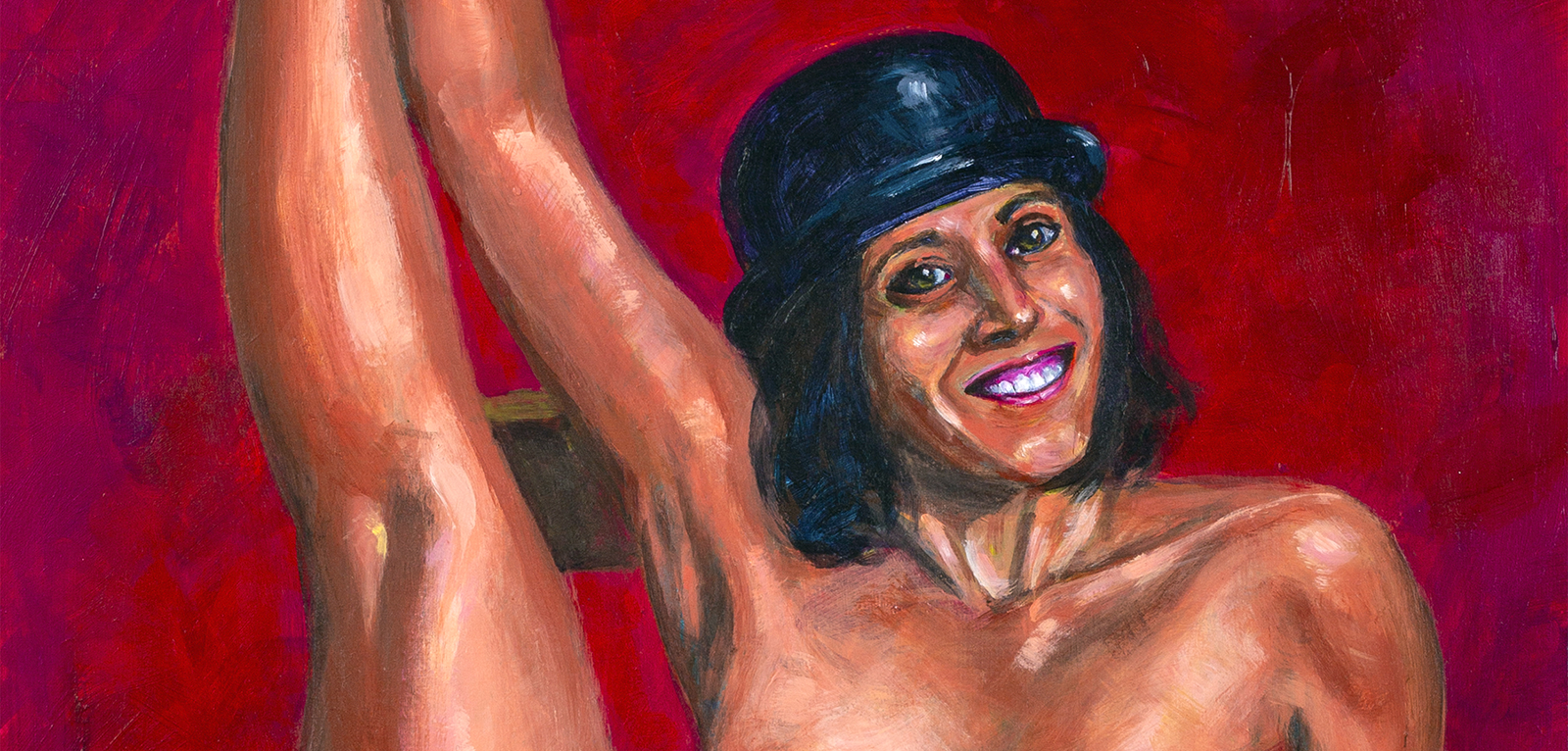
The bodies in my paintings are not anonymous. They belong to real women who have committed themselves to this artistic project in order to bring the presence of their bodies as a gesture of affirmation and sovereignty.
They are not passive figures serving an external gaze. They are co-authors of the paintings, active participants in the message that runs through the collection as a whole and through each of its works. Their presence does not fulfill a decorative function: it sustains the deep meaning of these images and gives truth to the vindicatory gesture that runs through them.
What a gallery, a collector, or someone seeking a singular work can find in this collection
This collection of figurative erotic paintings offers a rereading of emblematic cinematic images from within my artistic universe. In it, visual memory, body, desire, and female sovereignty converge in a series conceived not as isolated provocation, but as a coherent, exhibition-minded plastic proposal charged with cultural resonance.
Whoever approaches this collection can find more than a sum of paintings. They can find a series articulated by an internal logic, by the same tension between cinematic memory and erotic rewriting, and by a will to transform familiar images into visually new bodies. That coherence allows the collection to be read both from the intimate experience of desire and from a curatorial, exhibition, and cultural perspective.
Series coherence
The series is conceived as a whole that can be read as a unified body or through each work separately. Each painting is built upon an argument and a cultural icon that I rewrite in order to shift it toward a new, vindicatory, and transgressive meaning without losing the emotional intensity that made it unforgettable.
Visit the page for professionals: galleries, curators, and art consultants
Visual power and cultural charge
Each of these paintings is born at the intersection of popular culture, cinematic memory, eroticism, and contemporary figurative painting. That combination gives the collection an immediate visual power, but also a cultural charge that invites a slower, richer, and more complex reading.
I am not interested in empty impact. I am interested in an image that seduces visually while, at the same time, activating associations, memories, tensions, and questions. I want the work to hold the gaze through its plastic presence, but also through everything it unsettles and reopens in the person who contemplates it.
An affirmative, not complacent, eroticism
As in all my works, the paintings in this collection use eroticism as an affirmation of desire and not as a mere display of nudity. Nudity, gestures, and the stories beating behind each image seek to open in the viewer a reflection on their own sexuality and on their way of living eroticism in a freer, more conscious, and, why not say it, more joyful way.
My paintings are a song to life, to personal freedom, and to sovereignty over our body and our pleasure.