
Grease nude lightnin
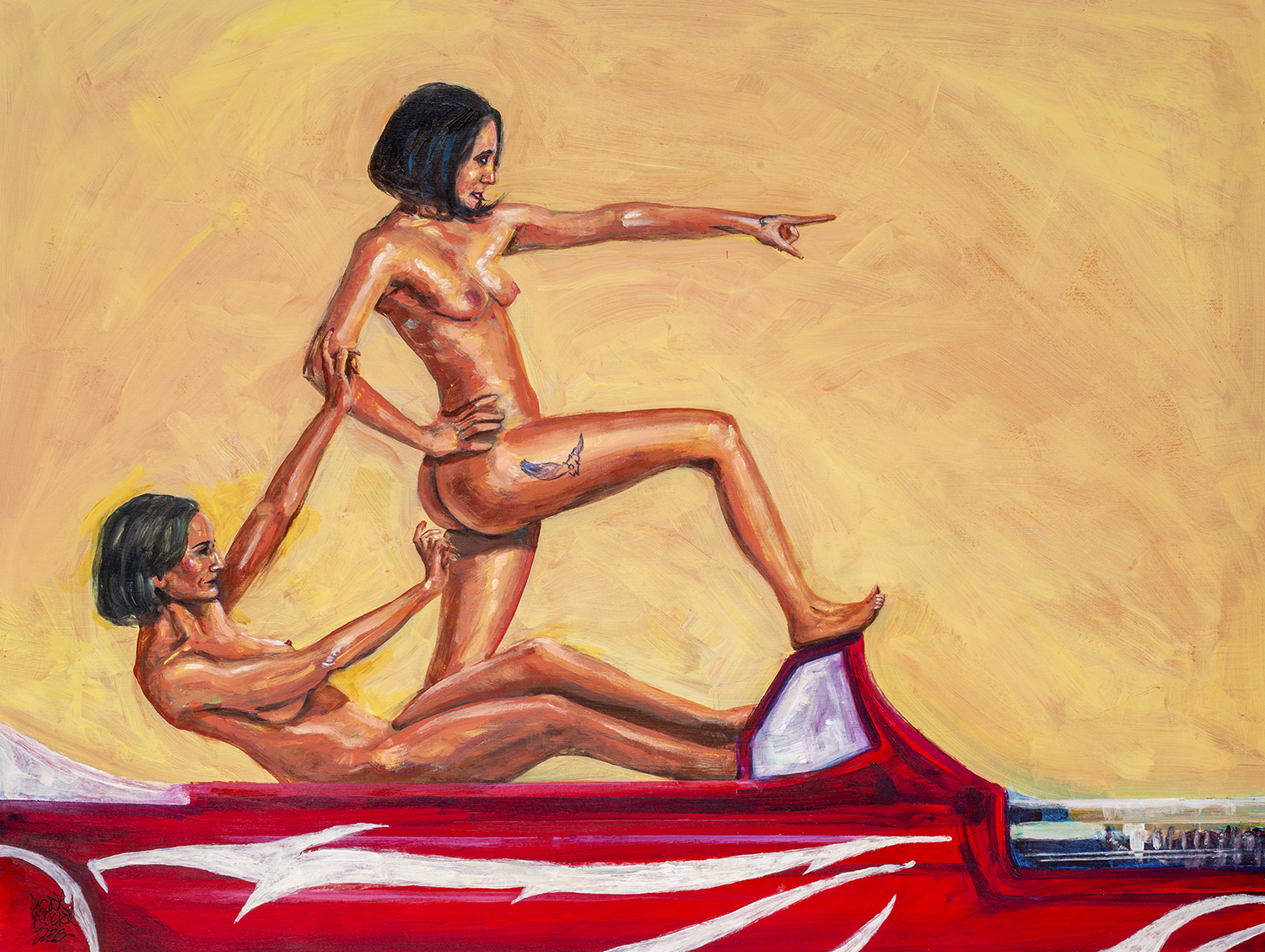
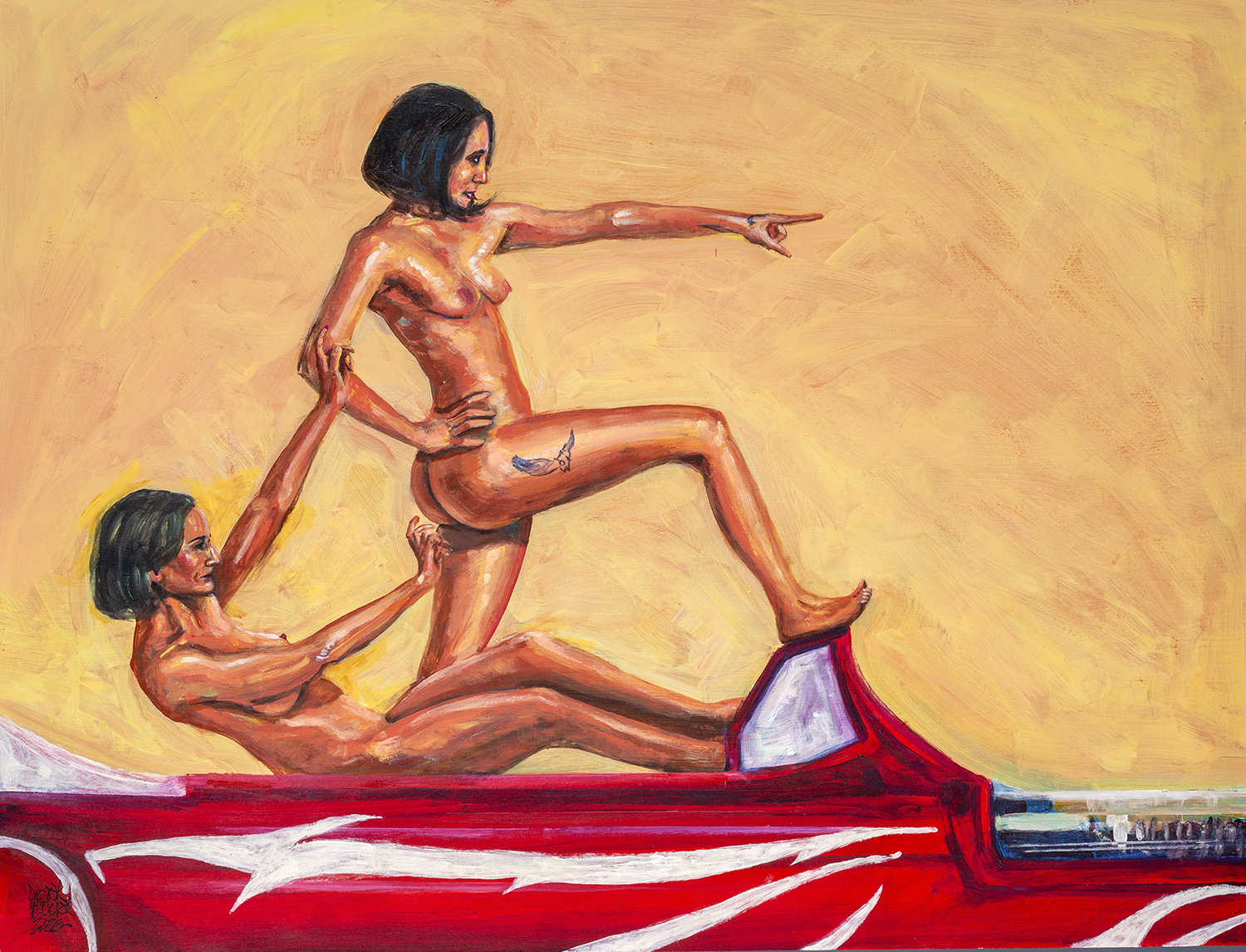
Grease nude lightnin is a figurative erotic painting by Pictor Mulier inspired by the musical number “Greased Lightnin’” from the film Grease (1978), directed by Randal Kleiser and choreographed by Patricia Birch. In this work, stage energy, bodily rhythm, and the erotic memory of the movie musical are transformed into a pictorial composition of feminine affirmation and sensual freedom.
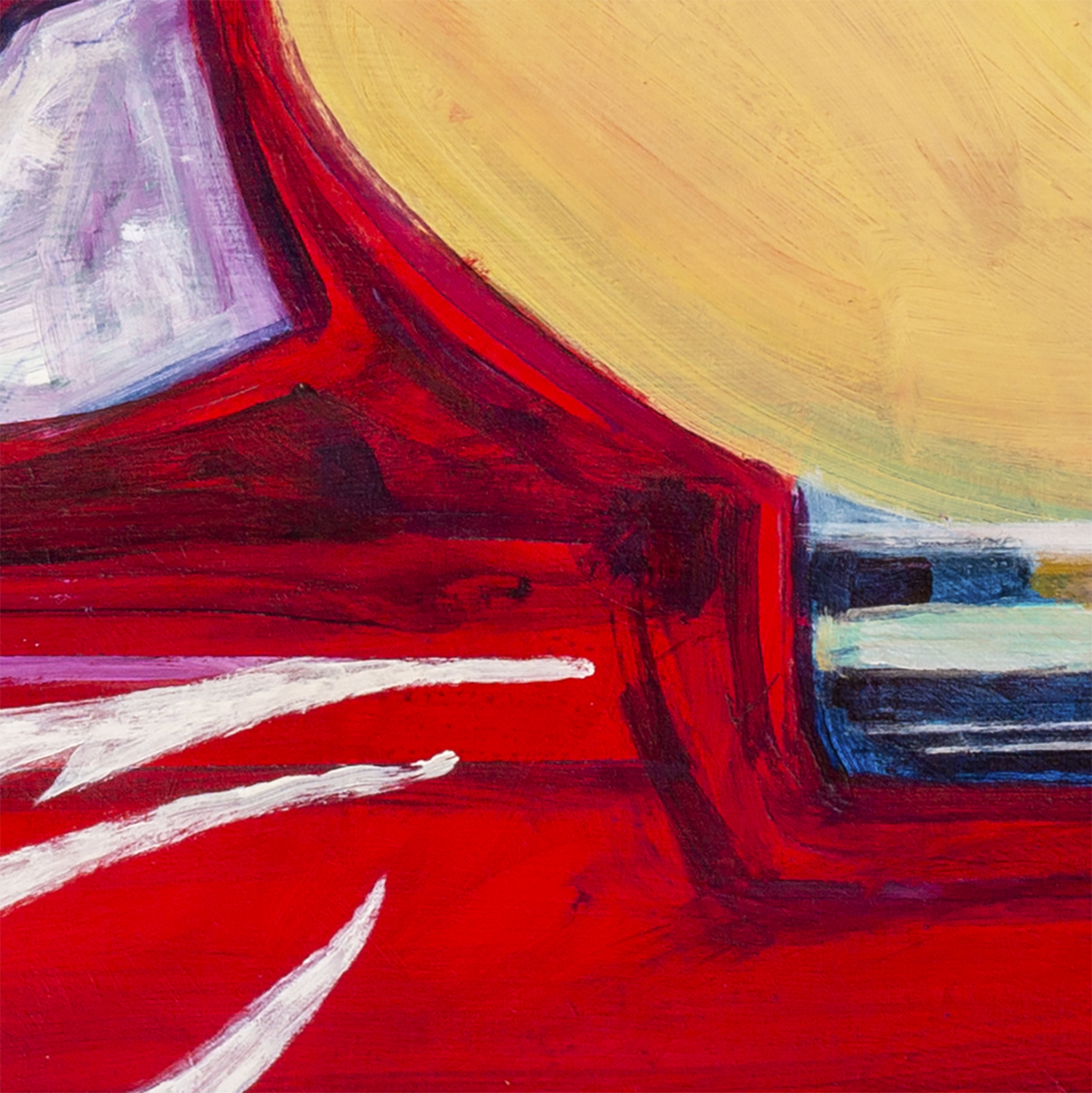
Artwork details
- Title: Grease nude lightnin
- Series: Erotic Tribute to the Most Iconic Dance Scenes in Film History
- Inspiration: the musical number “Greased Lightnin’” from the film Grease (1978), performed in the film by John Travolta and the T-Birds
- Reference choreography: Patricia Birch
- Technique: acrylic on MDF board primed with gesso
- Dimensions: 80 × 60 cm
- Artist: Pictor Mulier
- Year: 2026
Grease nude lightnin: an erotic tribute to the rebellious energy of a classic movie musical
When Grease was released in 1978, it became a hugely influential popular phenomenon. Its combination of music, choreography, youthful stage presence, and rock-and-roll iconography fixed images that still belong to the collective imagination today. I have returned to this film many times, and that is why I wanted to include it in my series Erotic Tribute to the Most Iconic Dance Scenes in Film History.
The scene from “Greased Lightnin’” has always interested me because of its swagger, physical drive, and imaginative freedom. In it, dance does not merely illustrate a song: it constructs a fantasy of speed, desire, and stage presence.
My tribute begins there, but redirects that energy toward two female bodies that take possession of the scene and reformulate it from another place: not from the masculine bravado of the original, but from a fully conscious bodily sovereignty.
Grease nude lightnin: body, rhythm, and desire in pictorial form
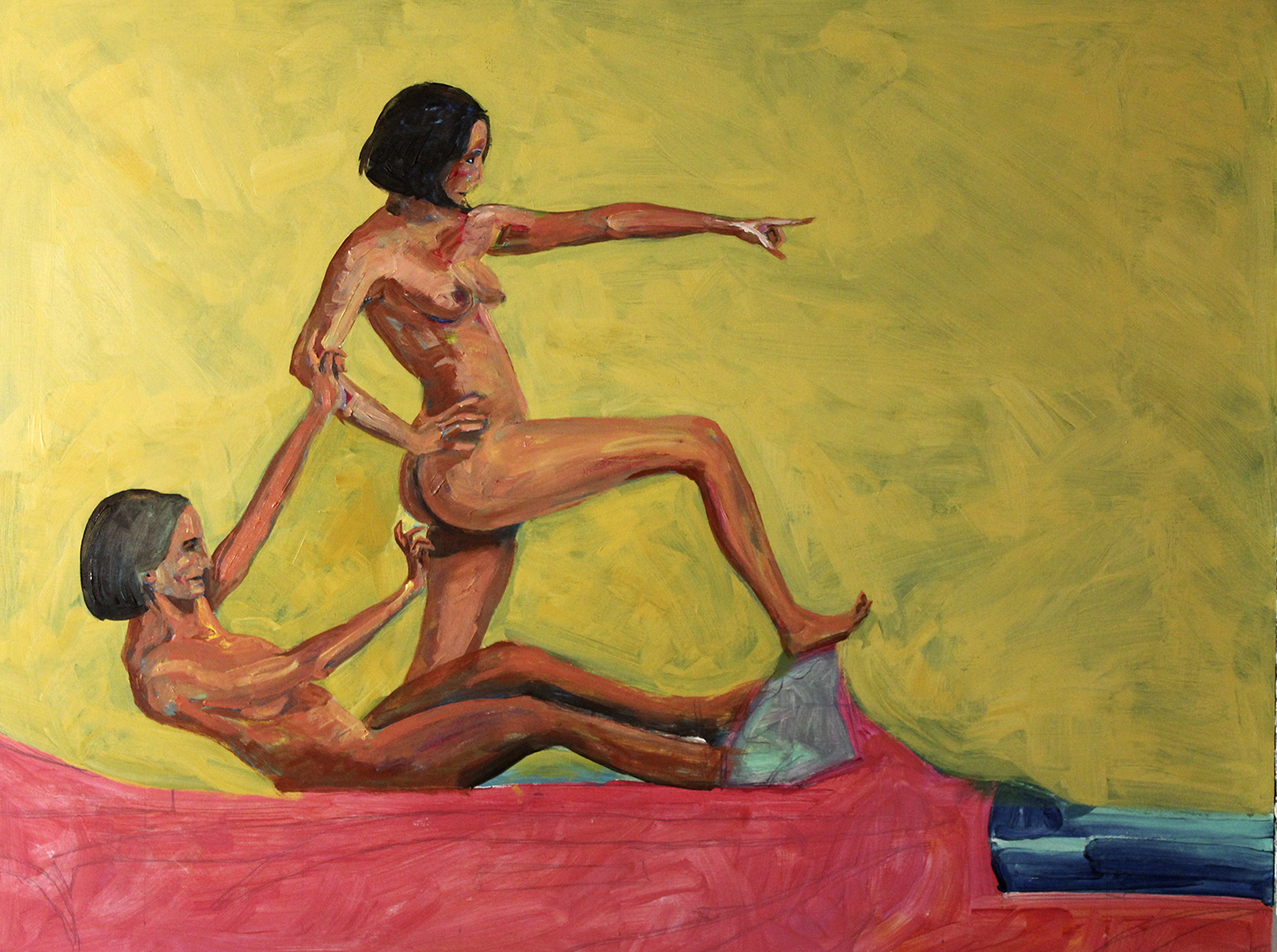
In this painting, I wanted to translate the choreographic intensity of the musical number into pictorial language. The two nude bodies do not appear as static figures, but as a synthesis of rhythm, gesture, and physical theatricality the very qualities that make the original scene so memorable.
The composition focuses attention on the tension between the two figures, on the direction of movement, and on the expressive force of the pose. Nudity does not function here as ornament, but as an intensification of presence, energy, and desire. The nude body, freed from clothing and superfluous setting, speaks more clearly through line, balance, and gesture.
Nudity as an affirmation of power and freedom
What I take from the original scene is not an attitude of domination in a literal sense, but its stage power. In Grease nude lightnin, that energy is embodied in female bodies that do not ask permission to occupy space. Nudity appears as a form of freedom, affirmation, and naturalness; not as submission to an outside gaze, but as the expression of a will of its own.
I am especially interested in that female appropriation of an iconography originally framed in masculine terms. Where the original imagery projected swagger, exhibition, and challenge, my painting shifts the center toward another reading: that of female figures who turn the stage gesture into a declaration of autonomy over their body, their desire, and their presence.
Cinema, dance, and painting: one single current of sensual intensity
This work is born from the dialogue between three artistic languages that deeply interest me: cinema, dance, and painting. Cinema brings visual memory and popular myth; dance brings rhythm, bodily tension, and the expansion of gesture; painting, in turn, fixes that energy in a still image that can be contemplated again and again.
That passage between the arts is one of the keys to this series. I am interested in taking scenes that already belong to many people’s visual culture and translating them into a different territory: that of contemporary erotic painting. In this way, the cinematic reference does not disappear, but ceases to be a mere quotation and becomes a new work, with its own sensuality, its own temperature, and its own discourse.
Creative process
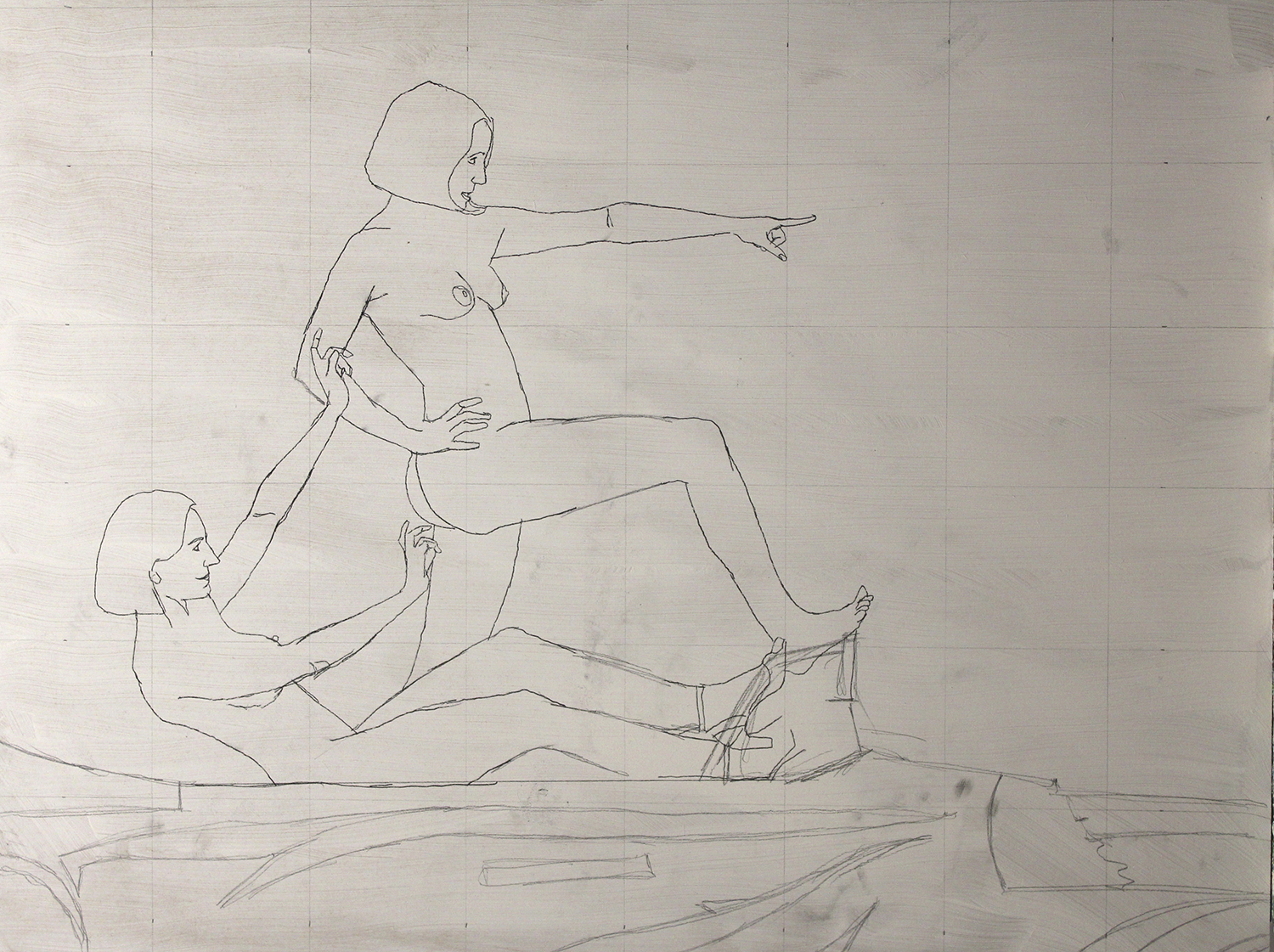
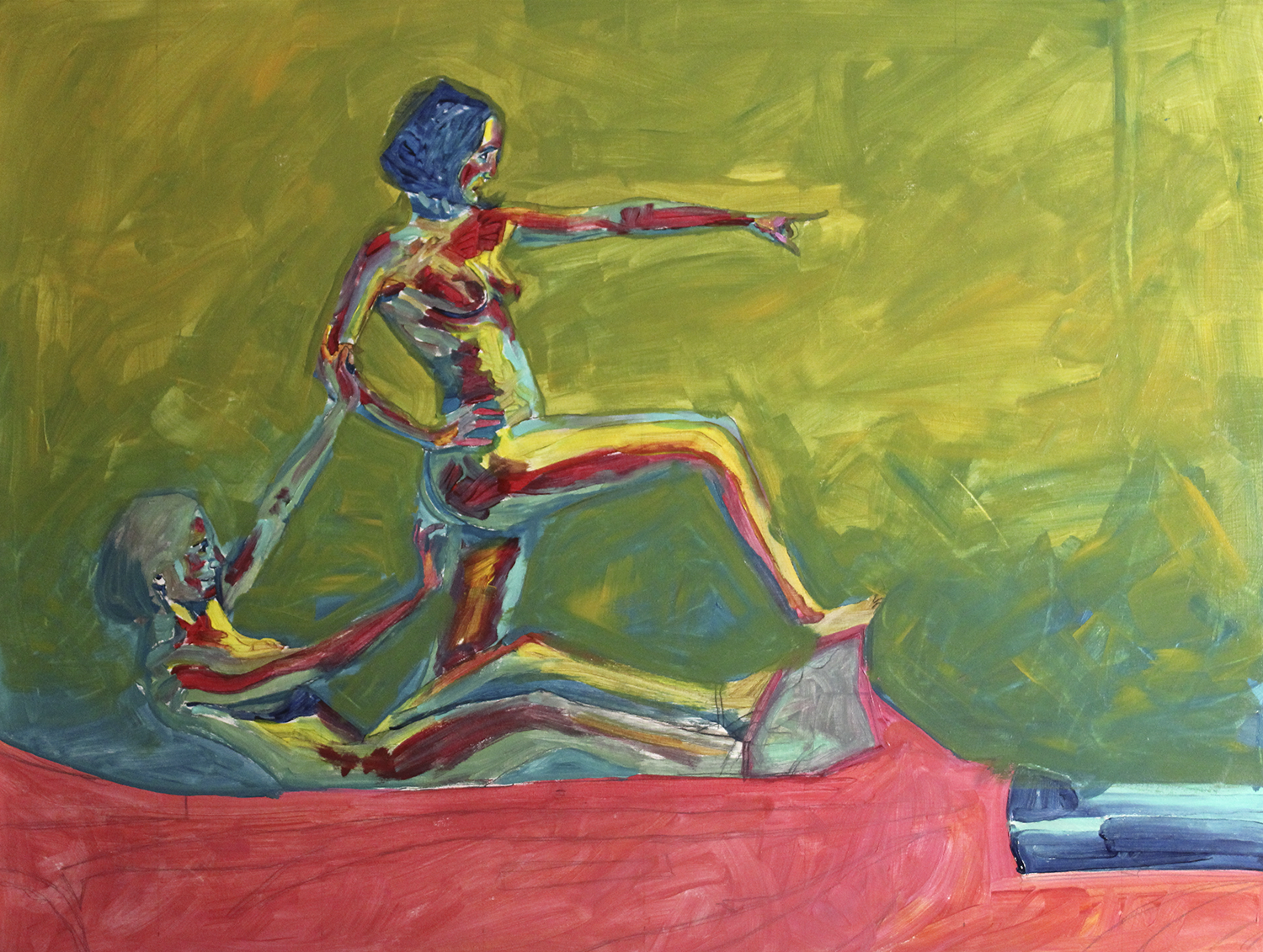
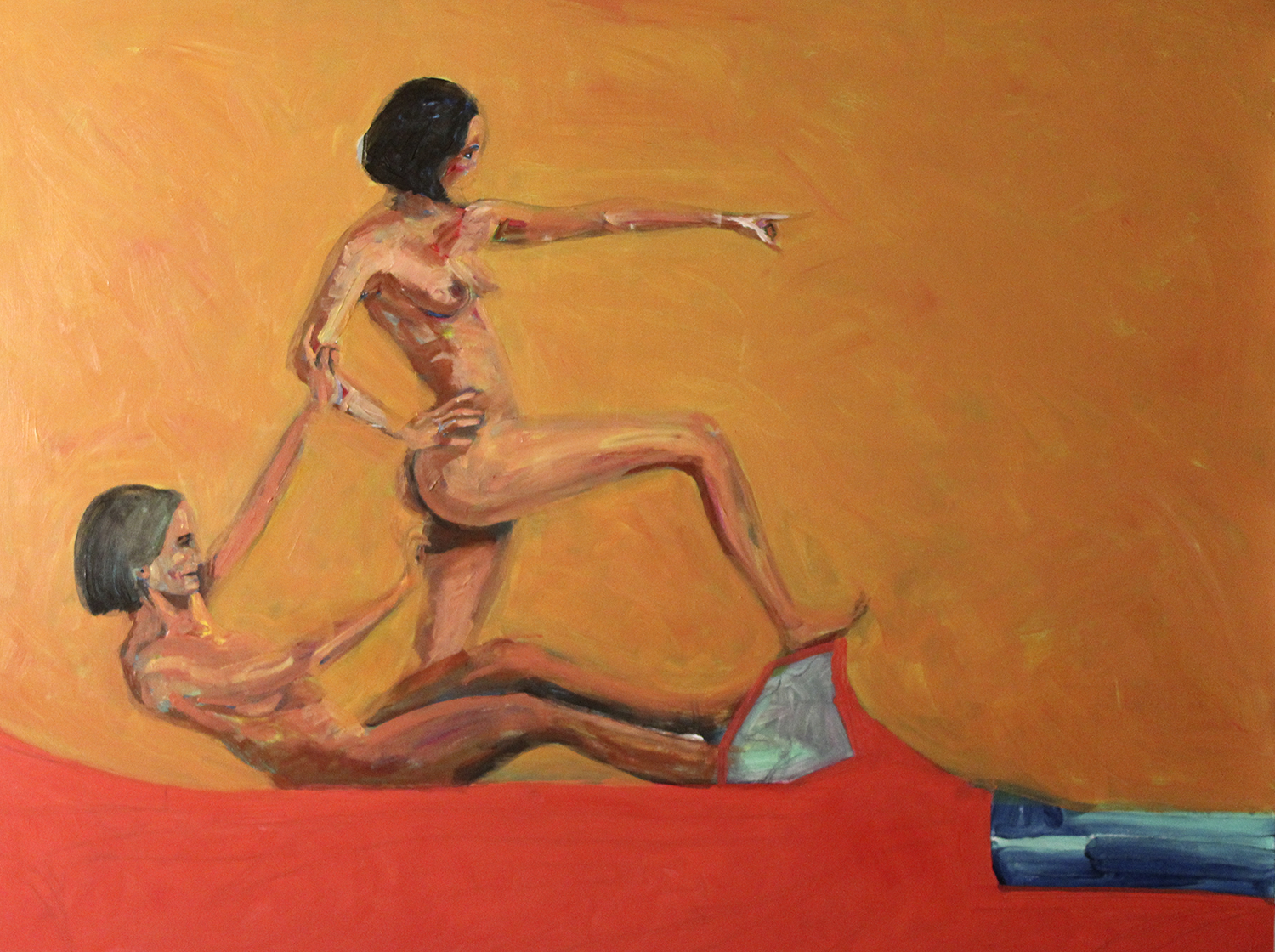
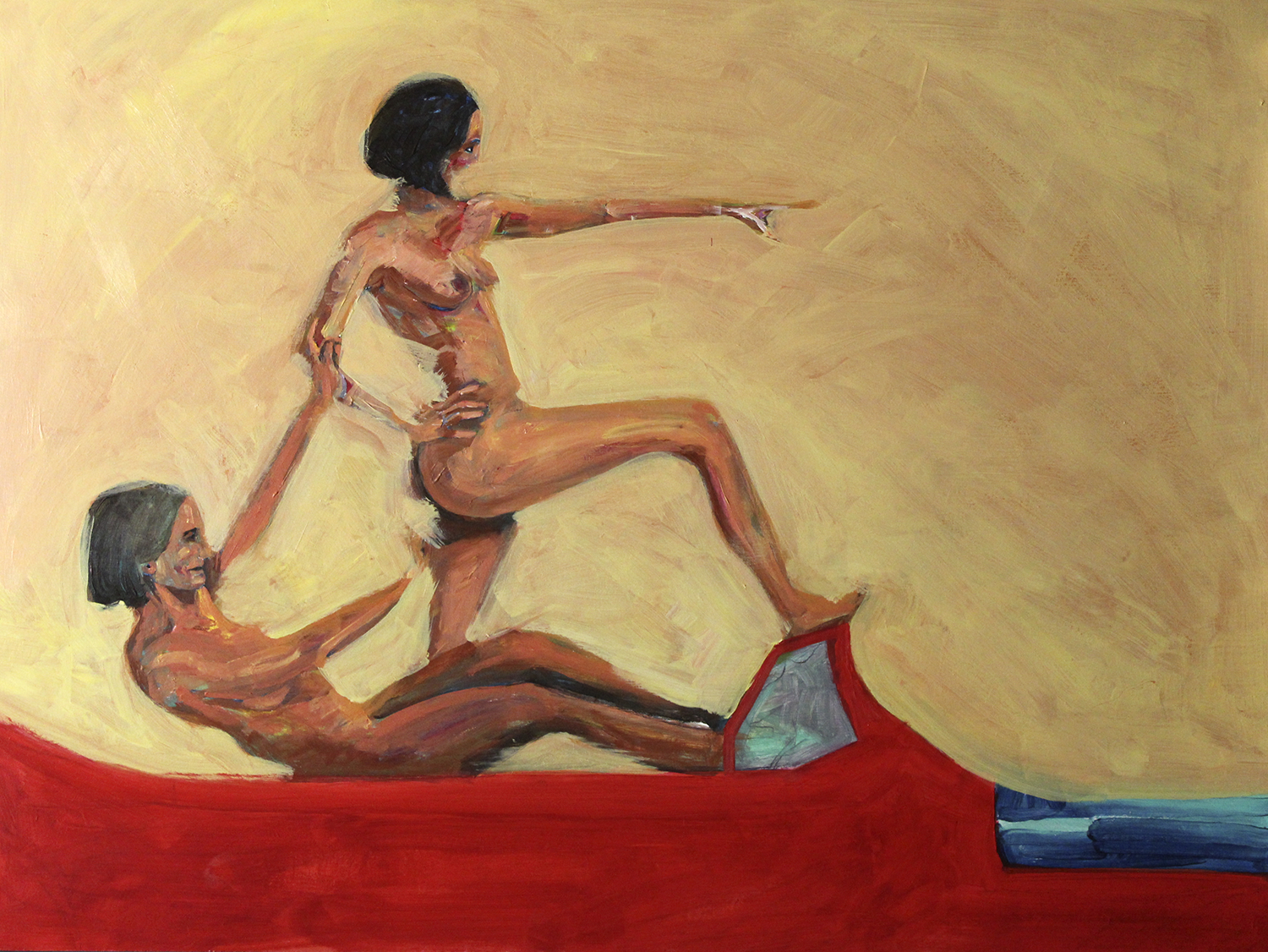
As in the rest of my work, I begin with a linear drawing that organizes the composition and places the figures with precision. I then build the painting in layers.
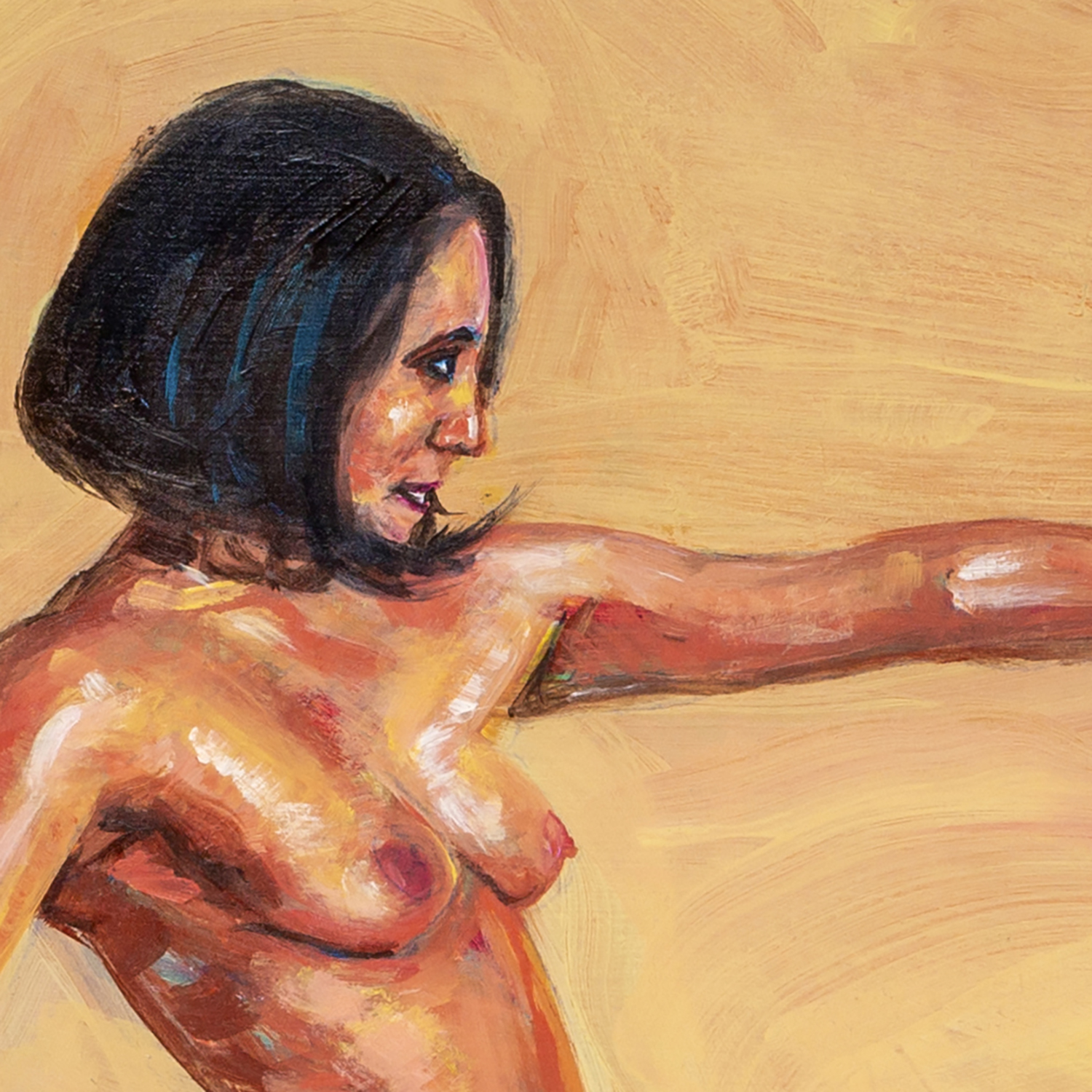
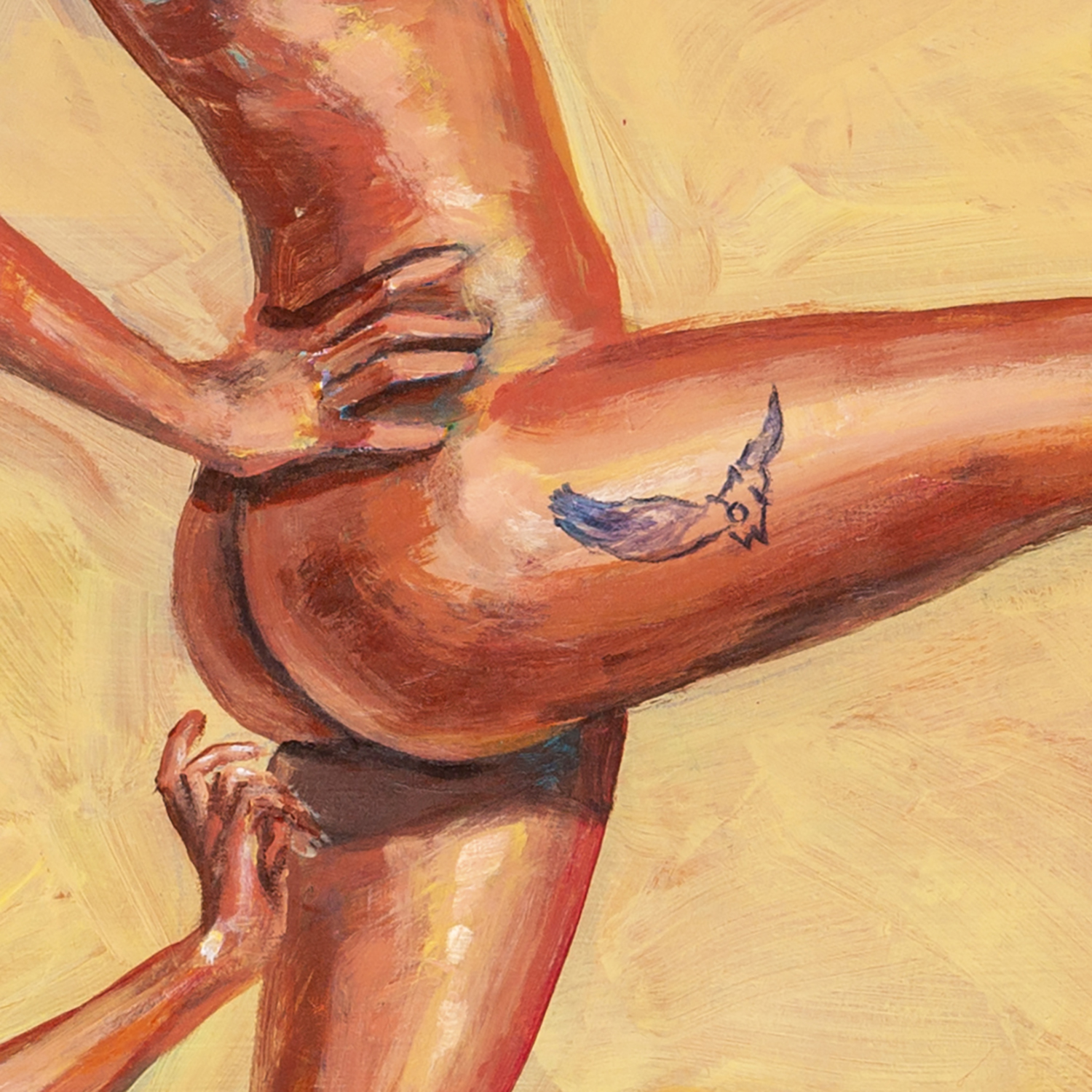
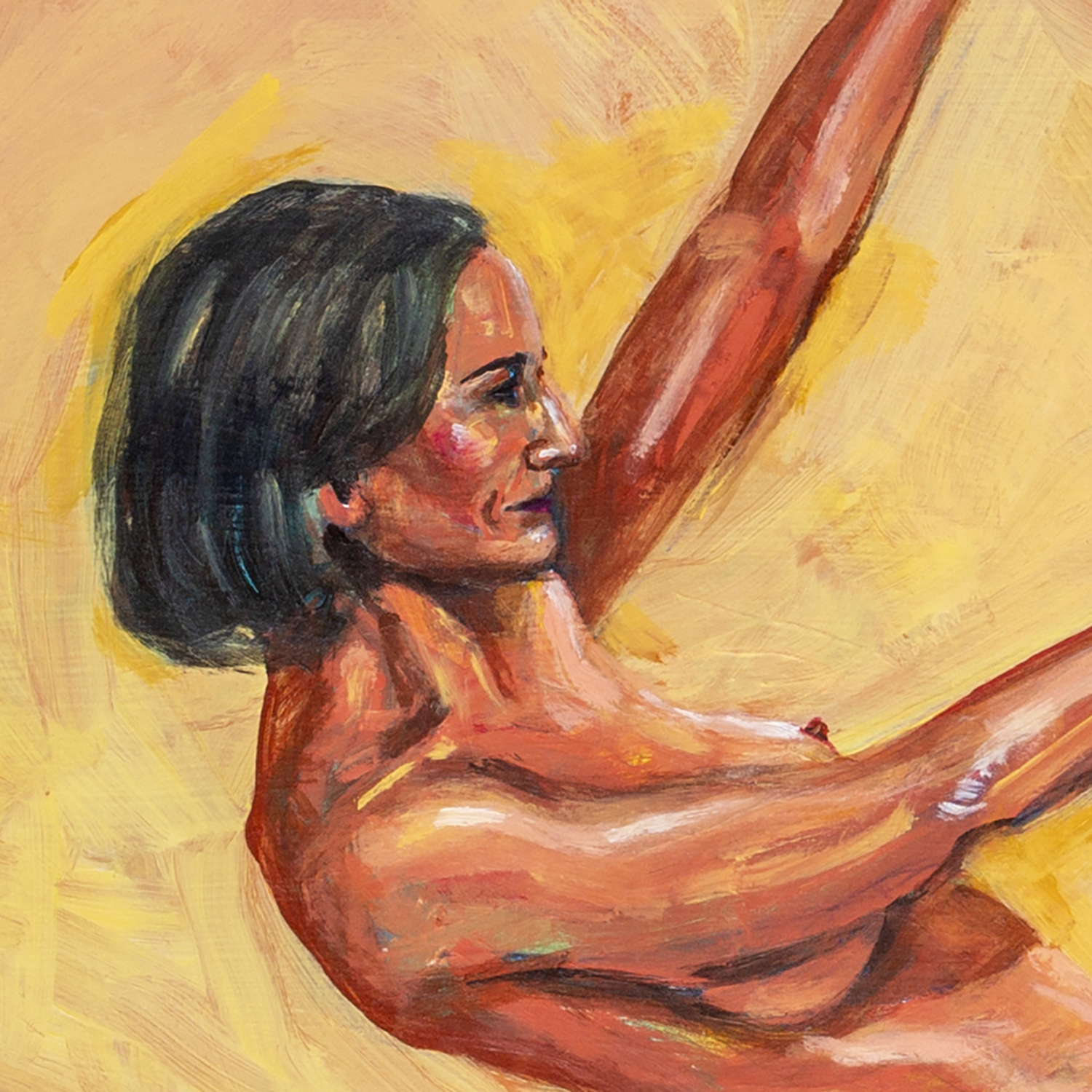
In this case, although the figures have great expressive force, they occupy a relatively contained portion of the overall format, which is why I chose a broader, more synthetic brushstroke. I avoided excessive detail so that the image would function as a whole, and so that the viewer’s eye might complete what the brush deliberately leaves open.
I work with acrylic on MDF board primed with gesso, a support that allows me to combine structural firmness, quick drying, and the superimposition of layers, always seeking a vibrant, intense, and unified image.
A work for collectors of erotic art who love movie musicals
Grease nude lightnin may be of particular interest to collectors of contemporary erotic art, lovers of movie musicals, and those who appreciate dialogues between different artistic disciplines. In it converge cinematic memory, choreographic rhythm, sensual figuration, and a contemporary reading of the female nude.
This convergence makes it a singular piece within the series, and a particularly appealing work for those seeking painting with identity, narrative, and visual tension. It may also be suggestive for women who wish to commission a work of this kind, in which nudity is approached as a form of personal affirmation, freedom, and chosen beauty.
Frequently asked questions about Grease nude lightnin
What does Grease nude lightnin represent?
It represents an erotic and contemporary reinterpretation of the stage energy of Grease, in which movement, nudity, and bodily attitude become an affirmation of feminine sensual freedom.
Which Grease scene inspired this painting?
It is inspired by the musical number “Greased Lightnin’” from the film Grease (1978), performed in the film by John Travolta and the T-Birds.
Why reinterpret Grease through erotic art?
Because when a movie musical reaches great physical and visual intensity, it contains a charge of desire that can be carried into painting. In this work, that charge is reinterpreted through a contemporary and feminine sensibility.
What is the relationship between dance, cinema, and sensuality in this work?
Dance provides gesture, rhythm, and bodily tension; cinema provides imagery and visual memory; painting transforms both elements into a new, still, and sensual image.
How does Pictor Mulier approach the female nude in painting?
As a form of presence, autonomy, and freedom. Nudity does not appear as empty provocation, but as expressive language and as an affirmation of the body.
Is this work part of a series?
Yes. It is part of the series Erotic Tribute to the Most Iconic Dance Scenes in Film History, in which Pictor Mulier reinterprets cinematic scenes through painting—scenes that have left a lasting visual and erotic imprint.
What kind of collector might be drawn to this painting?
It may appeal to collectors of figurative erotic art, lovers of movie musicals, and those seeking works with narrative, visual personality, and a contemporary reinterpretation of cultural icons.
What technique is used in the work?
It is made in acrylic on MDF board primed with gesso, a technique that allows for the layering of paint, chromatic vibration, and the material stability of the original work.