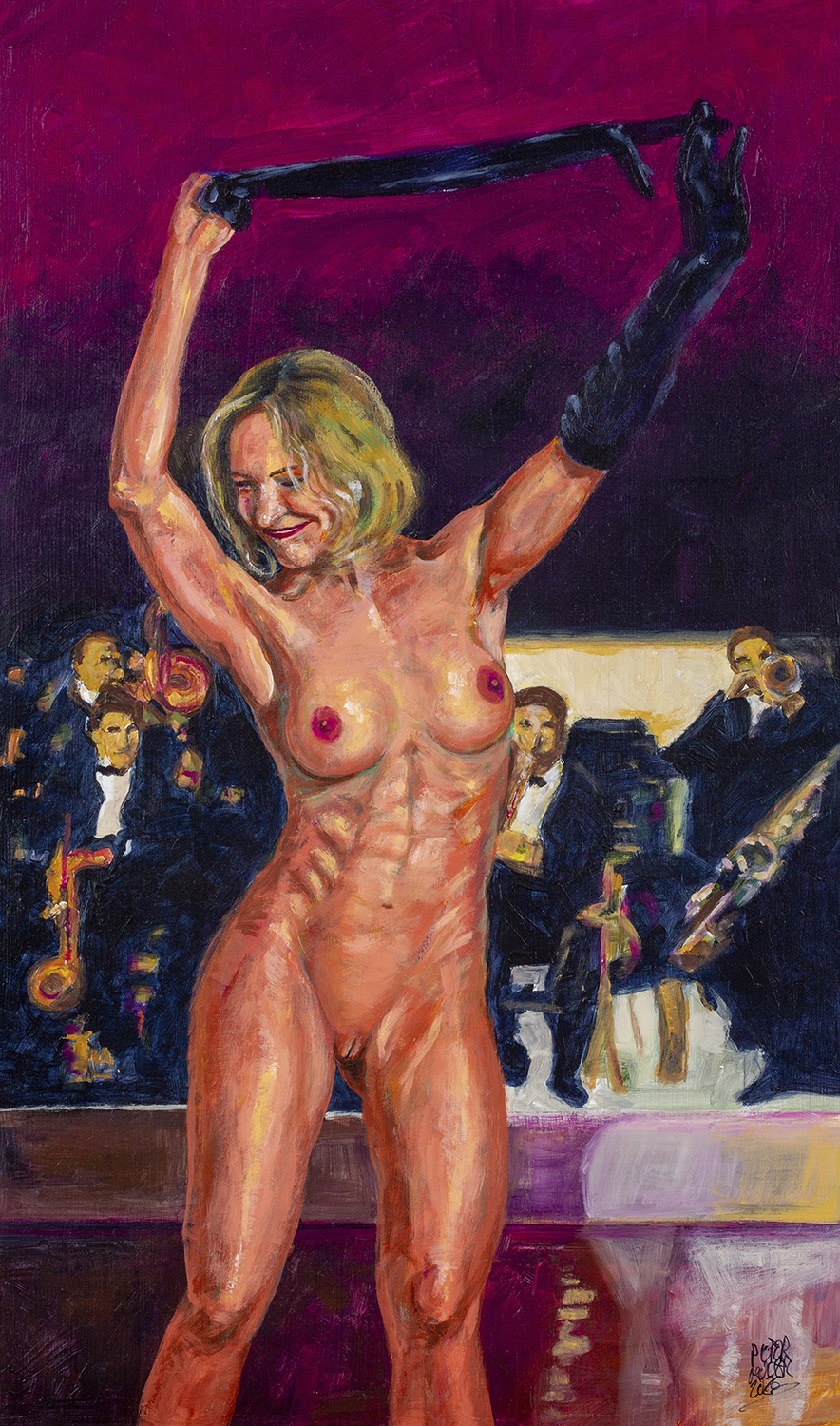
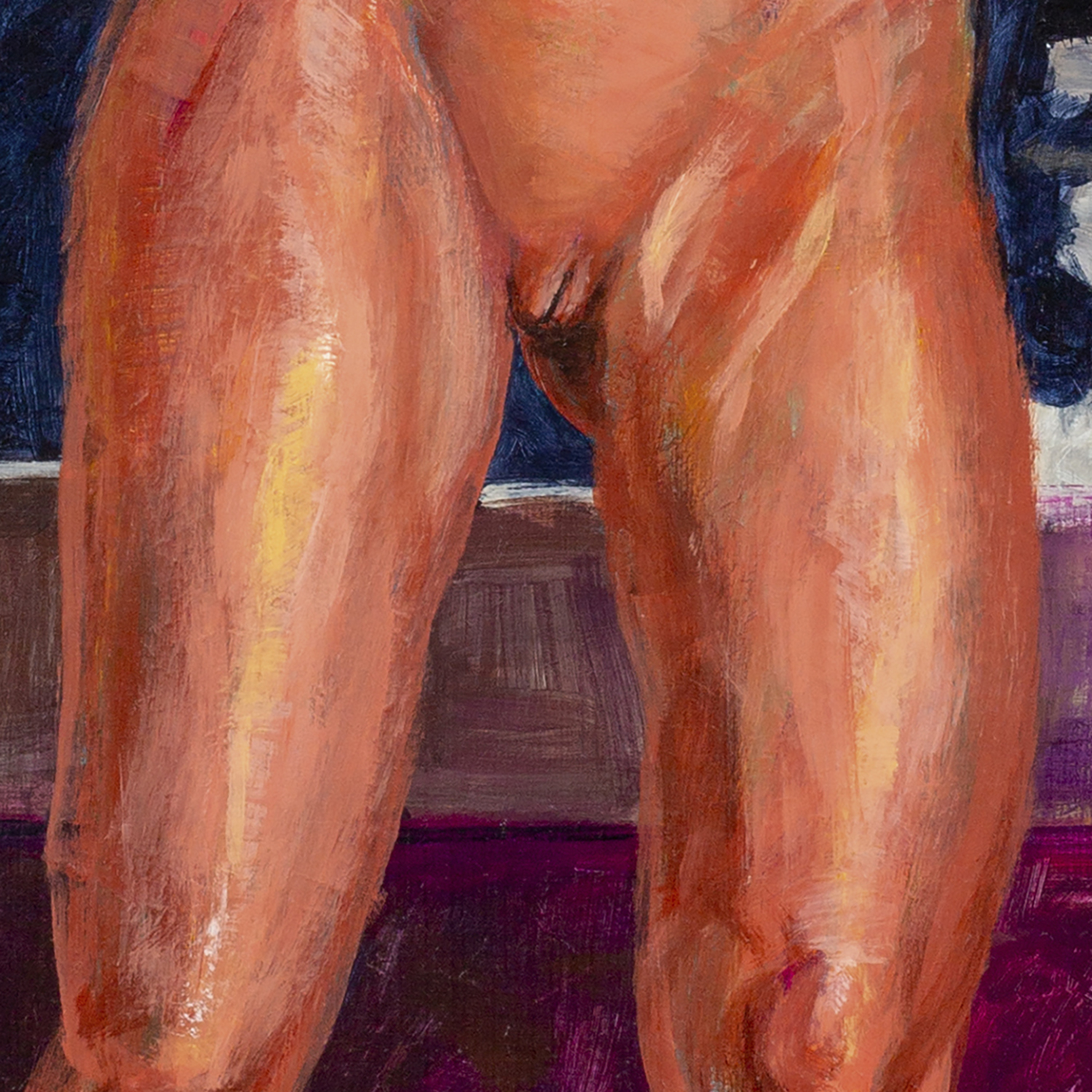
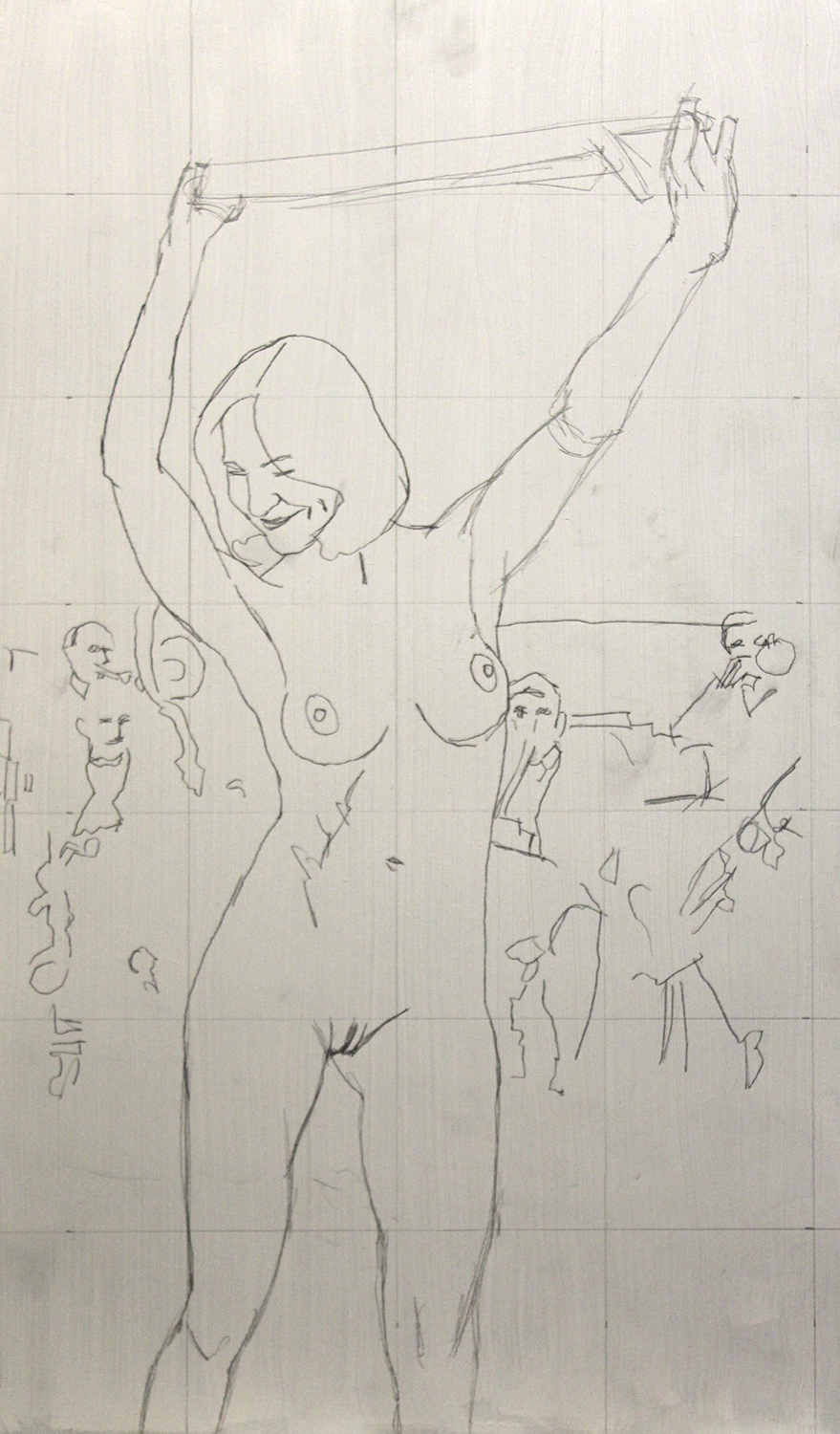
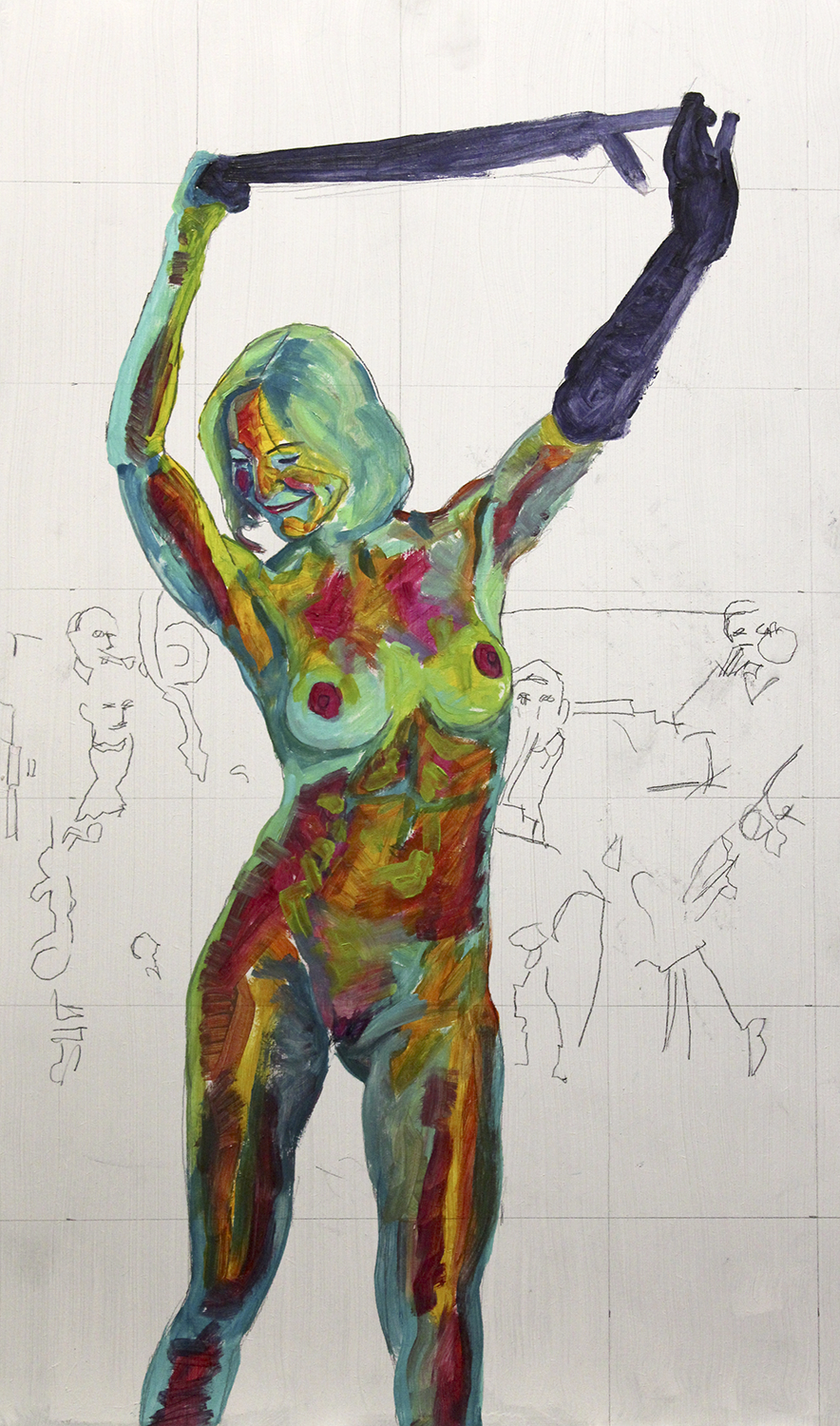
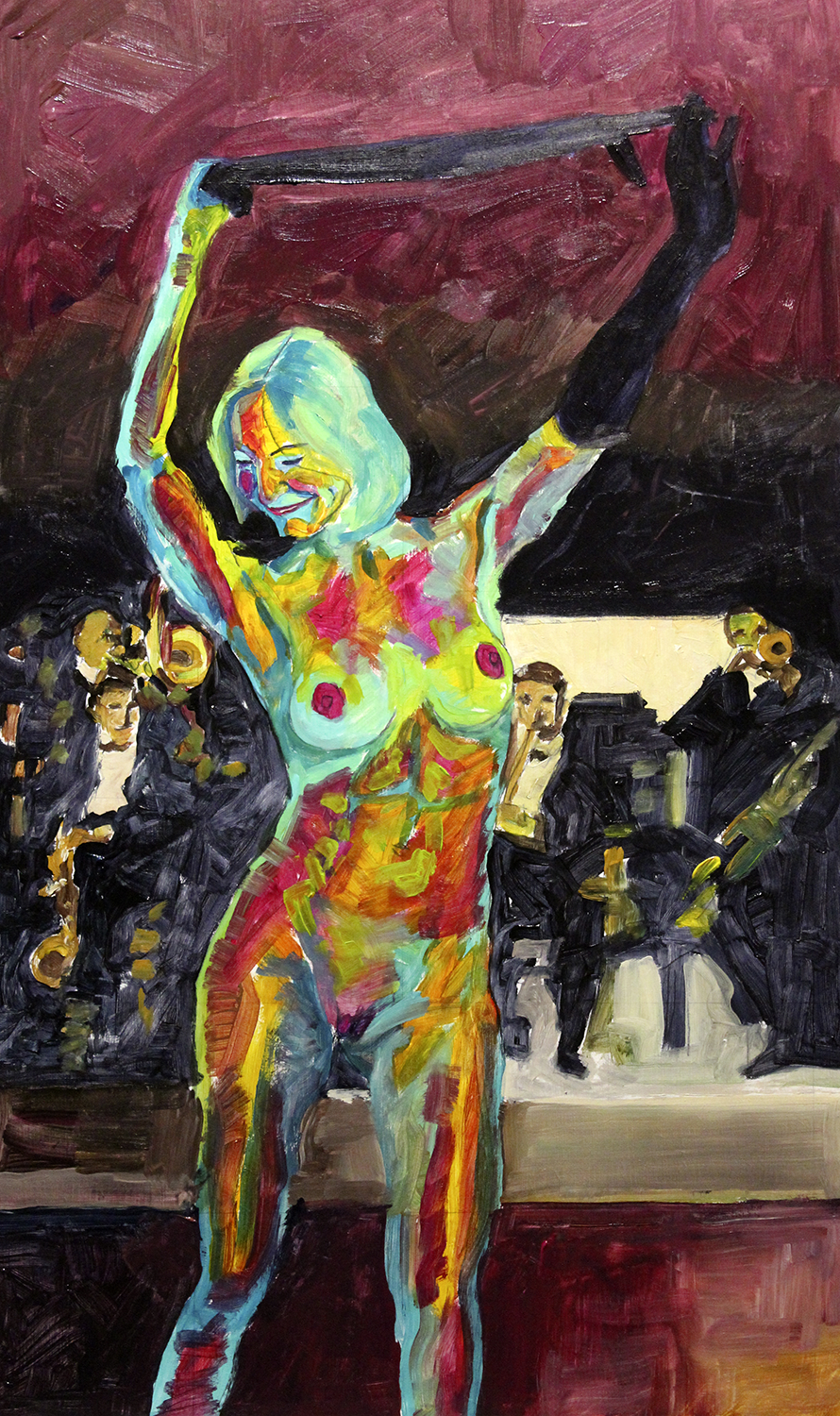
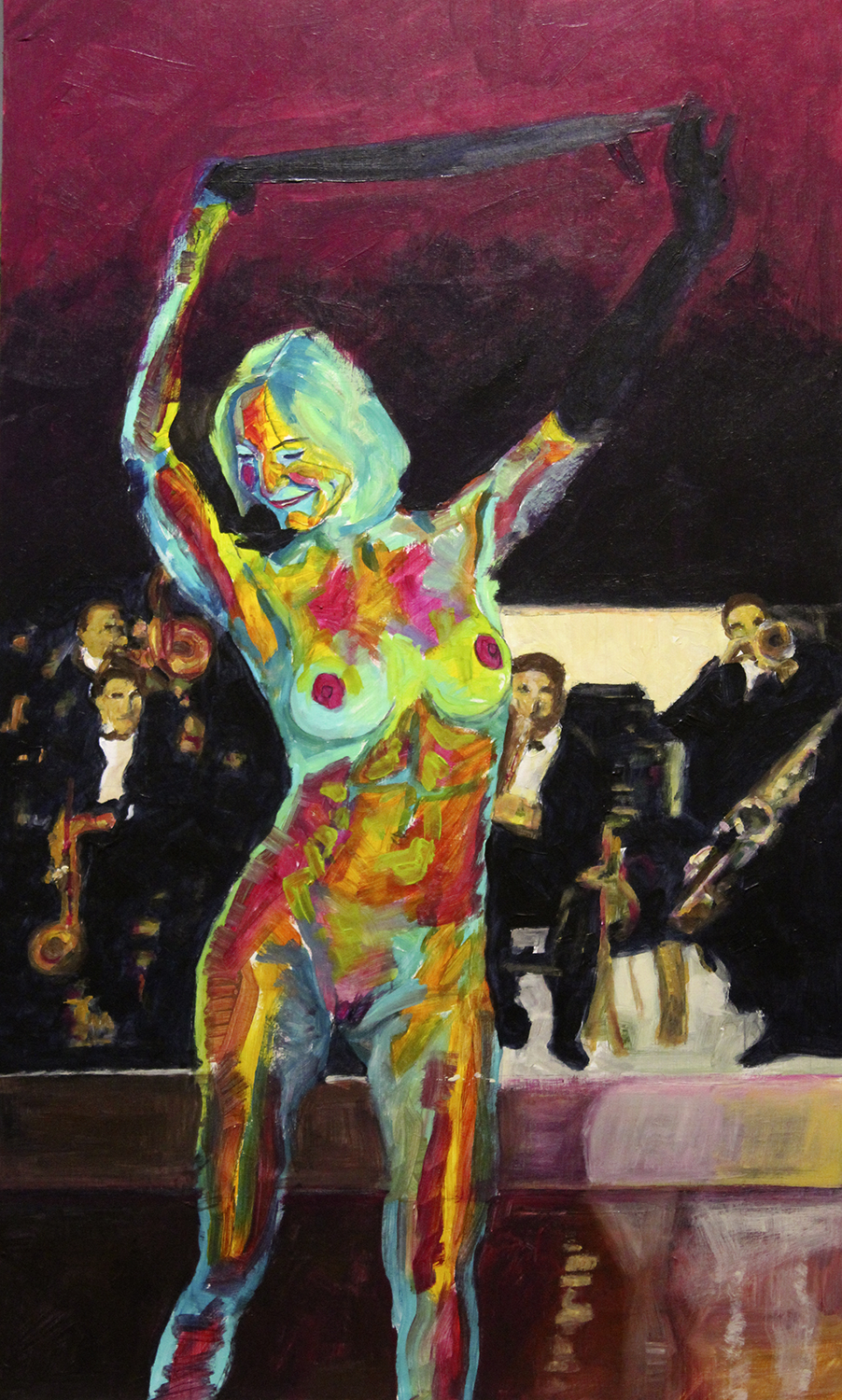
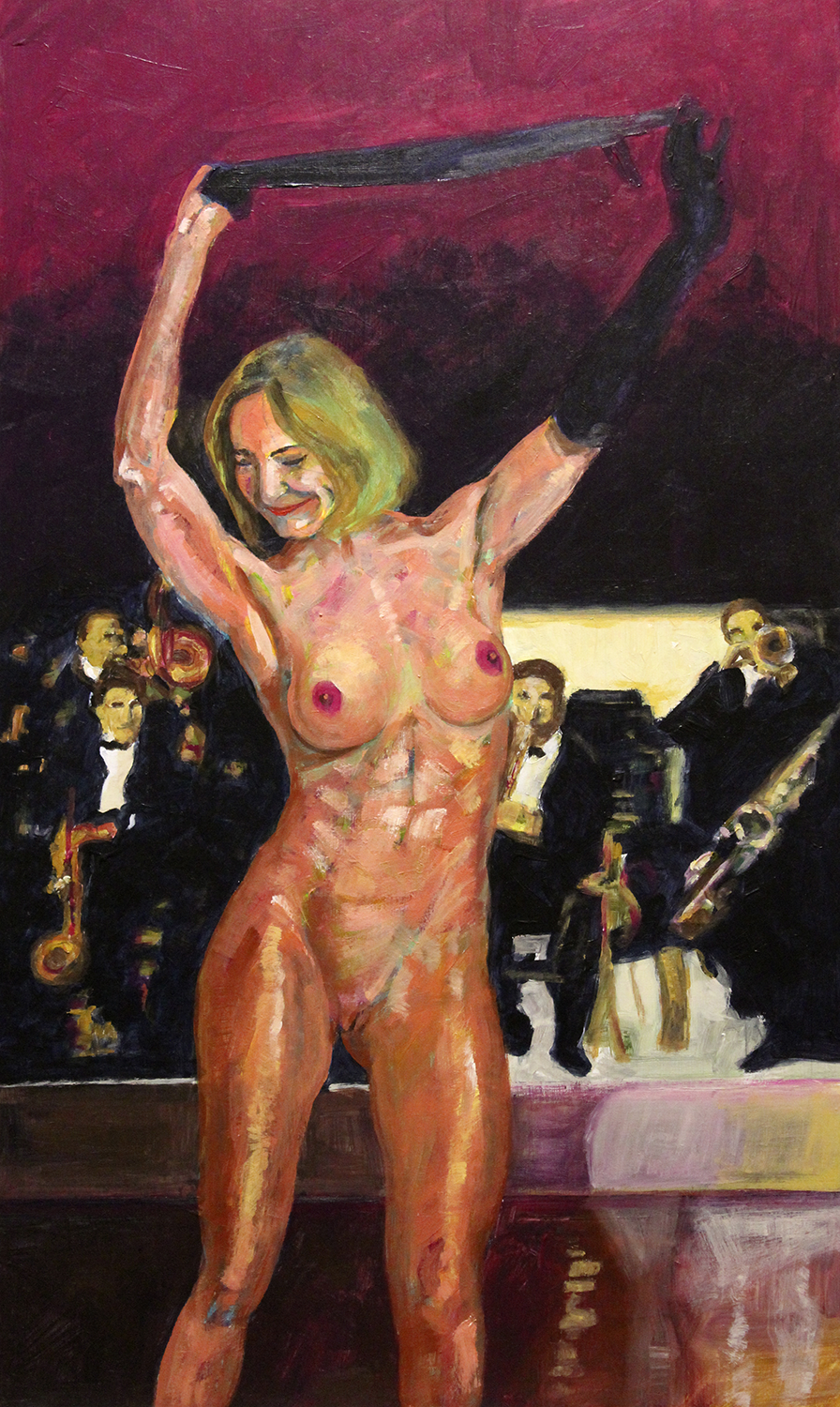
In it, I wanted to pay tribute not only to an unforgettable scene, but also to the immense power of erotic imagination.
When Gilda was released in 1946, the film was perceived as a work of intense sensual charge, and the Put the Blame on Mame scene became one of the great erotic myths of classic cinema.
Rita Hayworth, the black dress designed by Jean Louis, and the singing voice of Anita Ellis came together to create a sequence whose force did not lie in showing everything, but in suggesting enough to set the viewer’s fantasy ablaze.
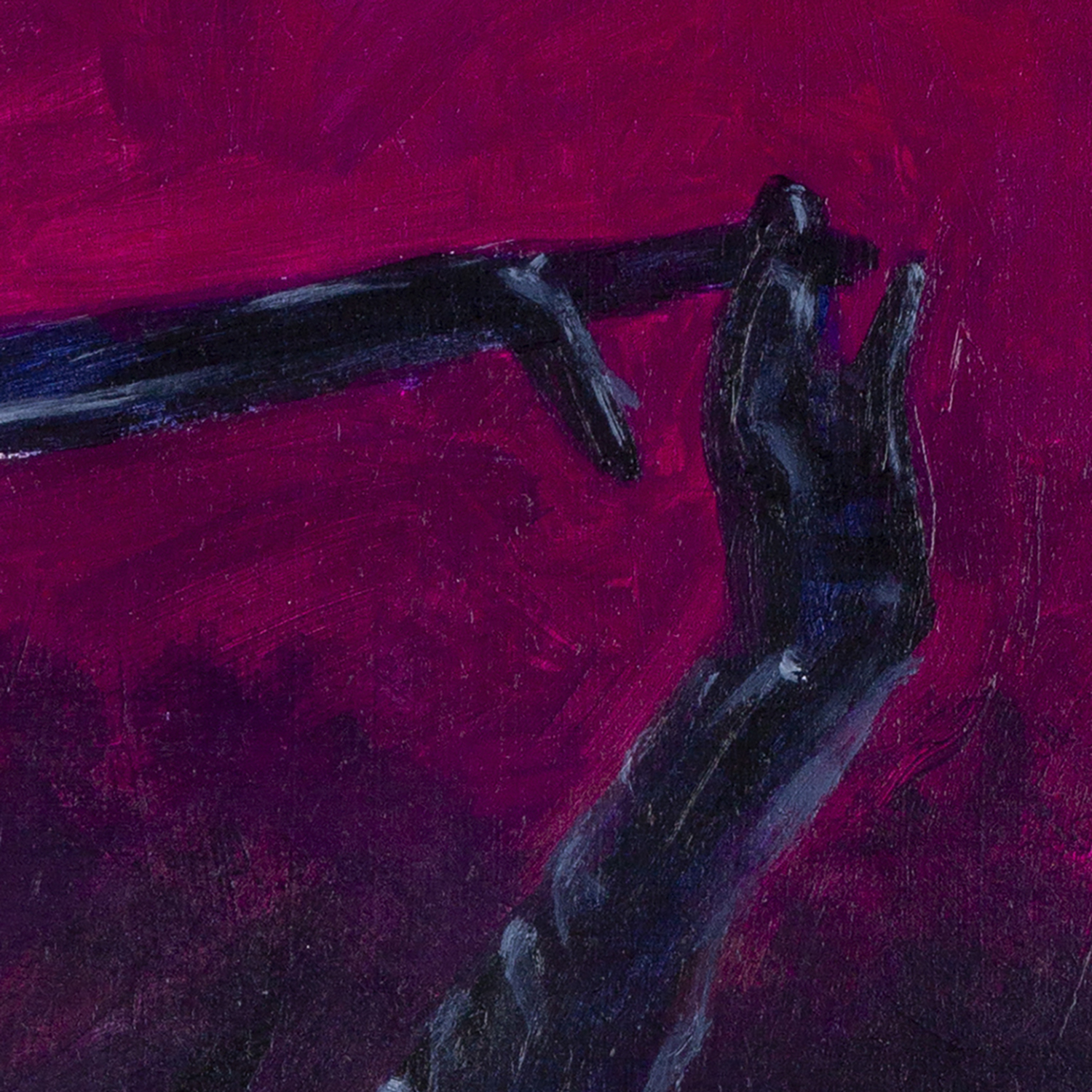
I grew up hearing the story that the glove she removed was only the beginning of a nude scene that never actually appeared. The fact that this scene made so many people fantasize about the same ending is precisely what fascinated me and drove me to reinterpret it in painting.
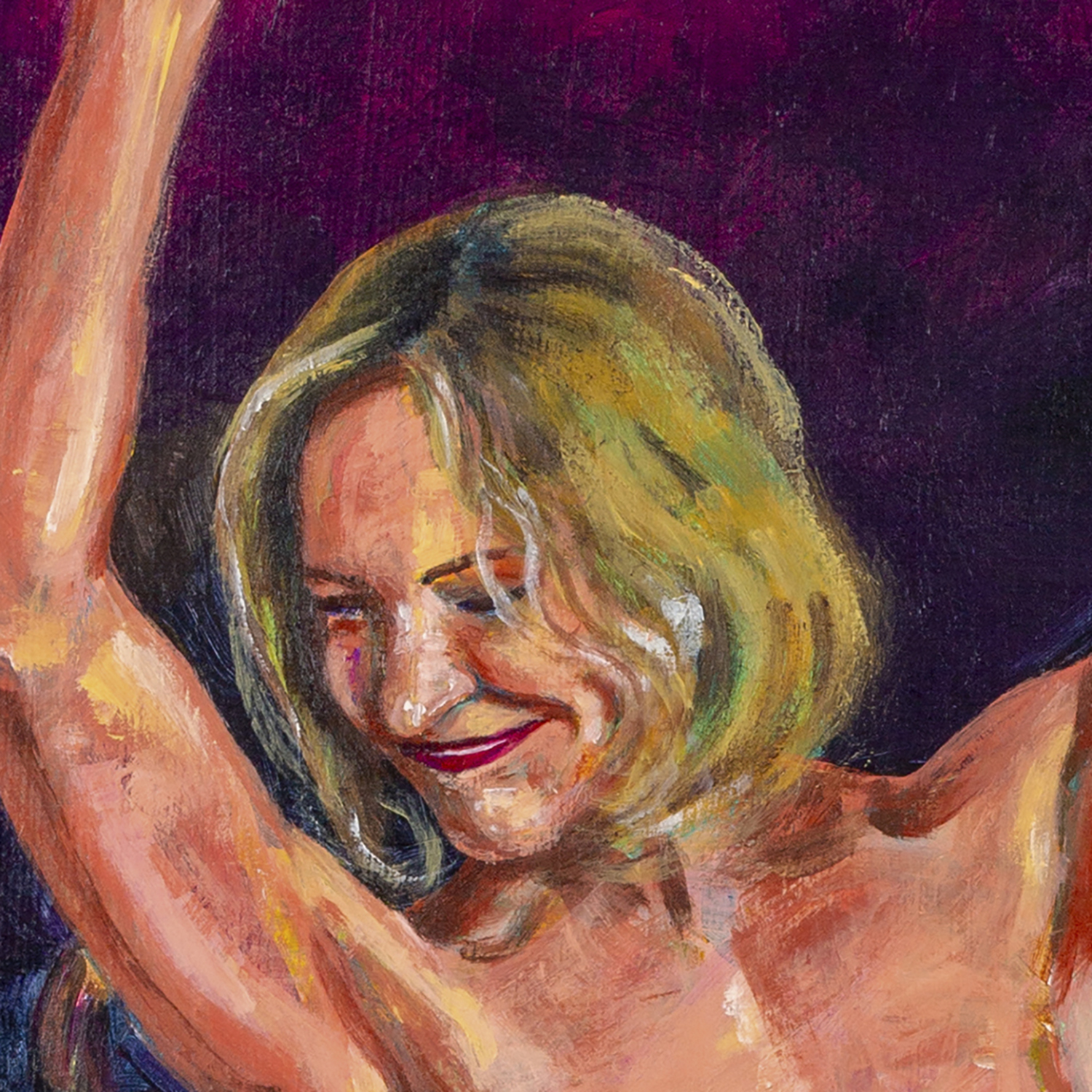
I was also captivated by the female power radiating from the scene. She is the one in control. She is the one who decides how far it goes. She owns her body, her eroticism, and the limits she sets. She is sovereign.
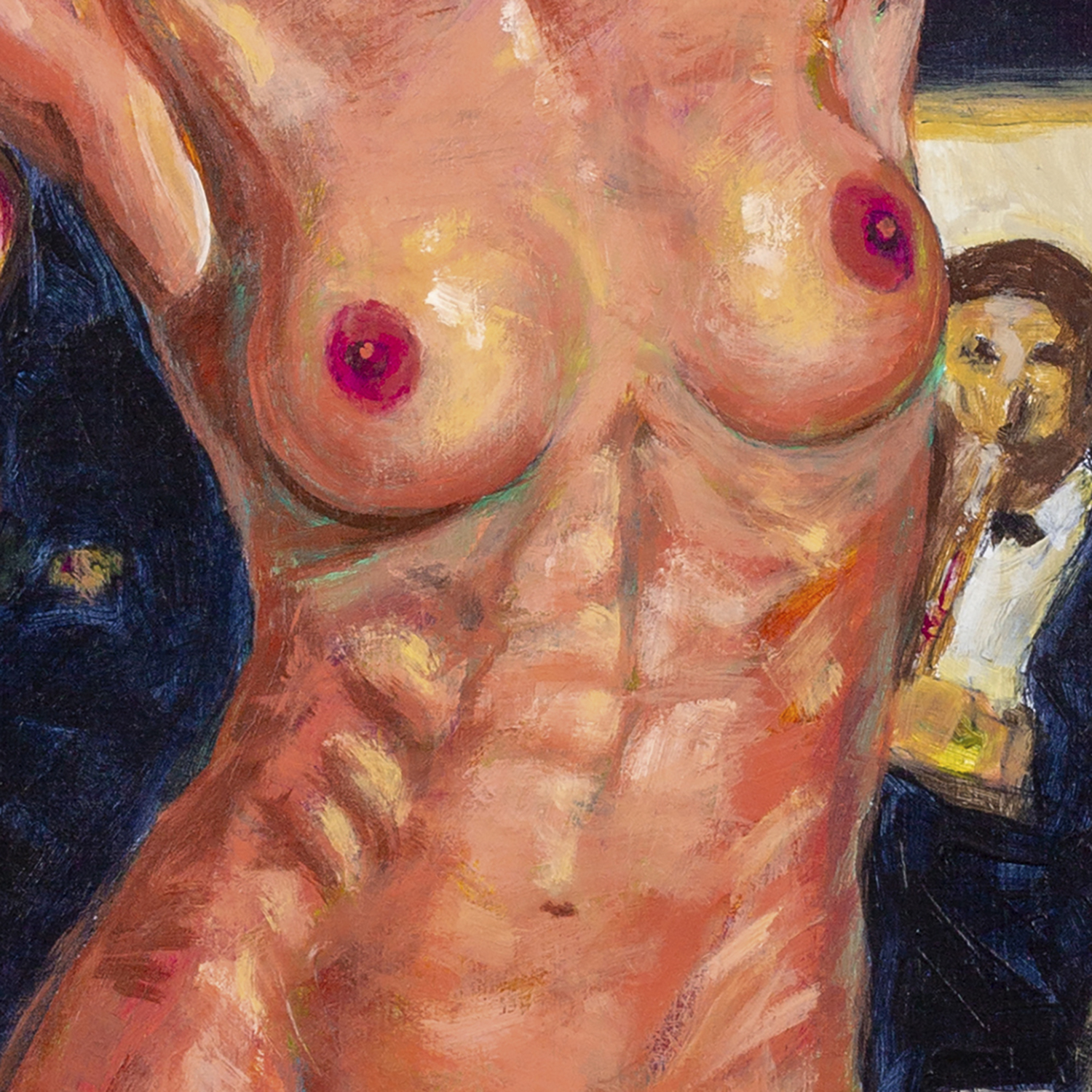
This painting is, above all, a tribute to desire. A vindication of the idea that desire can be as legitimate a source of inspiration as any other. It is also a cry of freedom, for which I relied on the complicity of Raquel, the model who posed for this work. Because in the era when Gilda was made, eroticism meant suggesting rather than showing. And what was feared was not only what could be seen, but also what could be imagined.
No right to imagine? To dream? To desire?
I refuse to accept it.
That is why I painted this picture: to give visible form to what so many imagined, dreamed, and desired.
About this painting
In this painting, I wanted to reflect the power of imagination. Few dance scenes in film history have suggested so much while showing so little.
Beyond its artistic and narrative value, beyond Rita Hayworth’s exuberant beauty and the hypnotic force of Put the Blame on Mame, what is most extraordinary about the scene is its power to eroticize the viewer’s imagination.
Gilda’s Glove is a work created for those who love erotic art not only for what it represents and how it represents it, but also for what it means: the entire imagined story behind it, now transformed into erotic mythology and worthy of this homage.
It is also a work intended for gallerists and collectors who, like me, delight in the cross-pollination between different art forms: film, dance, music, and painting.