
Why I created a collection of erotic paintings inspired by unforgettable scenes from film history.
Erotic Homage to the Most Emblematic Dance Scenes in Film History
This is the title I chose for the collection of figurative erotic paintings I have been working on for months, of which the first six works are already finished:
- Gilda’s Glove
- Naked Singing in the Rain
- Life is a cabaret
- Grease nude lightnin
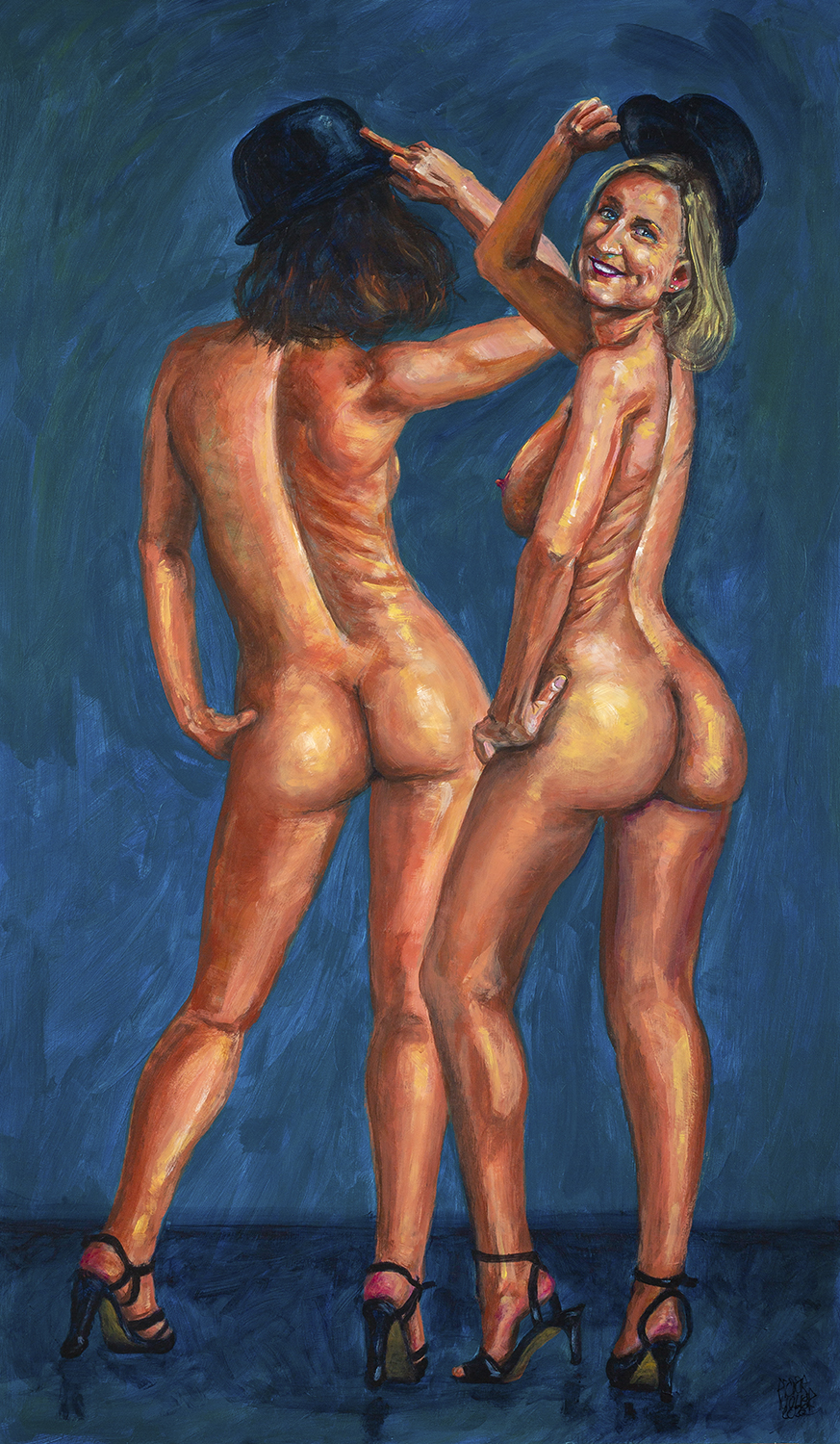
- All That Nude Jazz 1
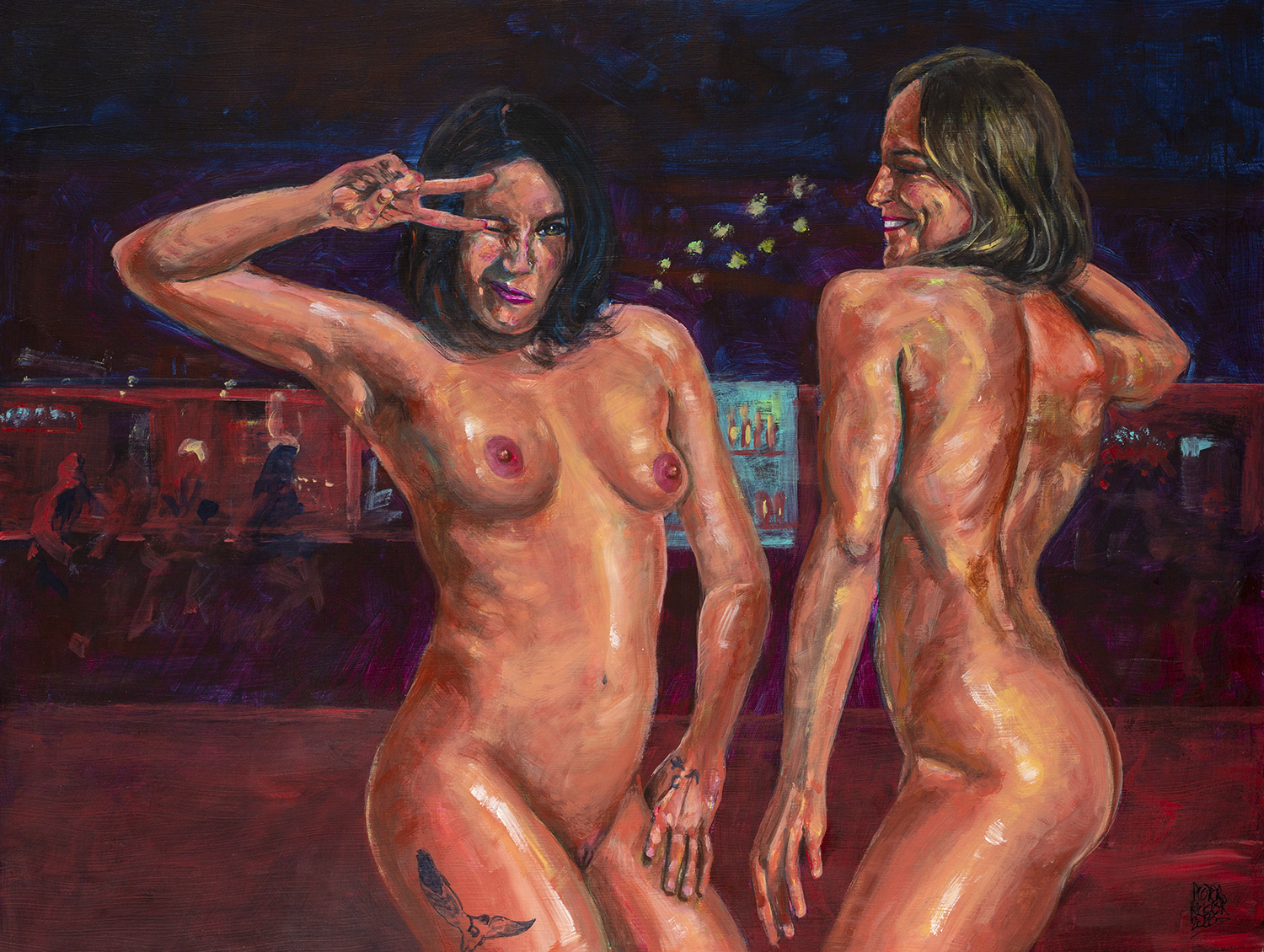
- Pulp Nude Fiction
At this moment, August 2026, I am still fully immersed in the project. Over the coming months I will continue expanding it with new pieces inspired by films such as Flashdance and Nine 1/2 Weeks, while also deepening the pictorial worlds that have already begun to unfold around Bob Fosse and his films Cabaret and All That Jazz.
I did not conceive this series as a simple cinephile game or as a nostalgic wink. I conceived it as a mode of painting a way of taking images that already belong to our cultural memory and returning them to the world transformed by desire, fantasy, and my own pictorial language.
Why This Erotic Homage to Cinema Through My Painting
My painting is nourished, above all, by desire — by my own, and often by that of the models I paint, as I explain in my article on desire as a source of artistic inspiration.
The films that are giving rise to this collection have accompanied me through very different moments of my life. Some I saw as a teenager; others, already in adulthood. Yet they all have one thing in common: they awakened desire in me. Sometimes through what they clearly showed on screen. At other times — and perhaps even more powerfully — through what they merely suggested, leaving my imagination to complete the rest.
That is precisely what interests me in this erotic homage to cinema: not reproducing a scene, but extending its evocative power. Bringing into painting what cinema showed, suggested, or compelled me to fantasize.
Six Films, Six Ways of Awakening Desire
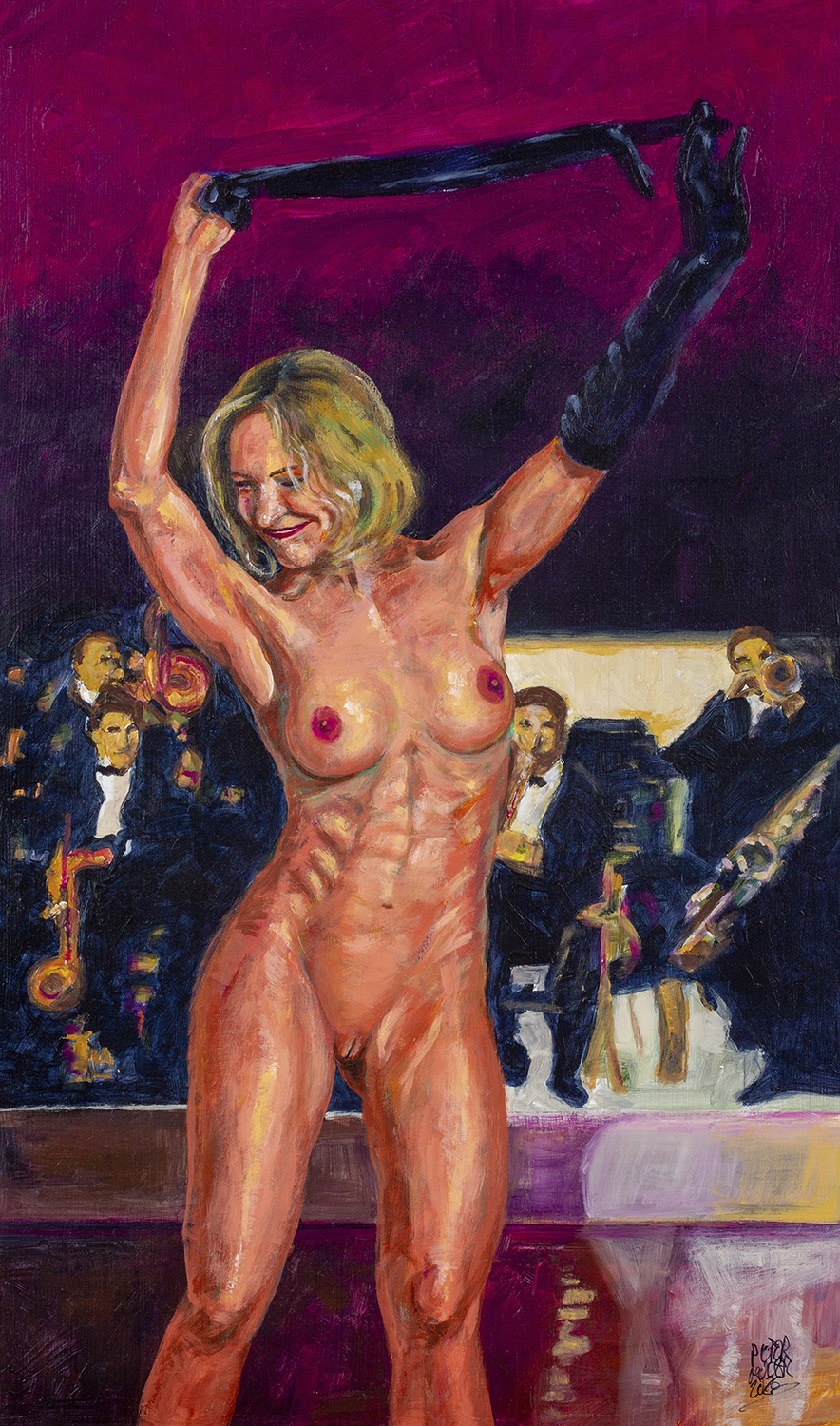
Gilda’s Glove
I grew up convinced, because that is what I had been told, that the version of Gilda we saw was censored, and that in the original Rita Hayworth undressed completely. I discovered at a very early age that the story was false. Yet its evocative power did not disappear. On the contrary, it remained alive in me for years.
It has always struck me as a very beautiful lie, one of those lies that, though untrue, reveal something true about our imagination. My painting is born precisely from that: from the desire to give visible form to what for so long existed only as fantasy.
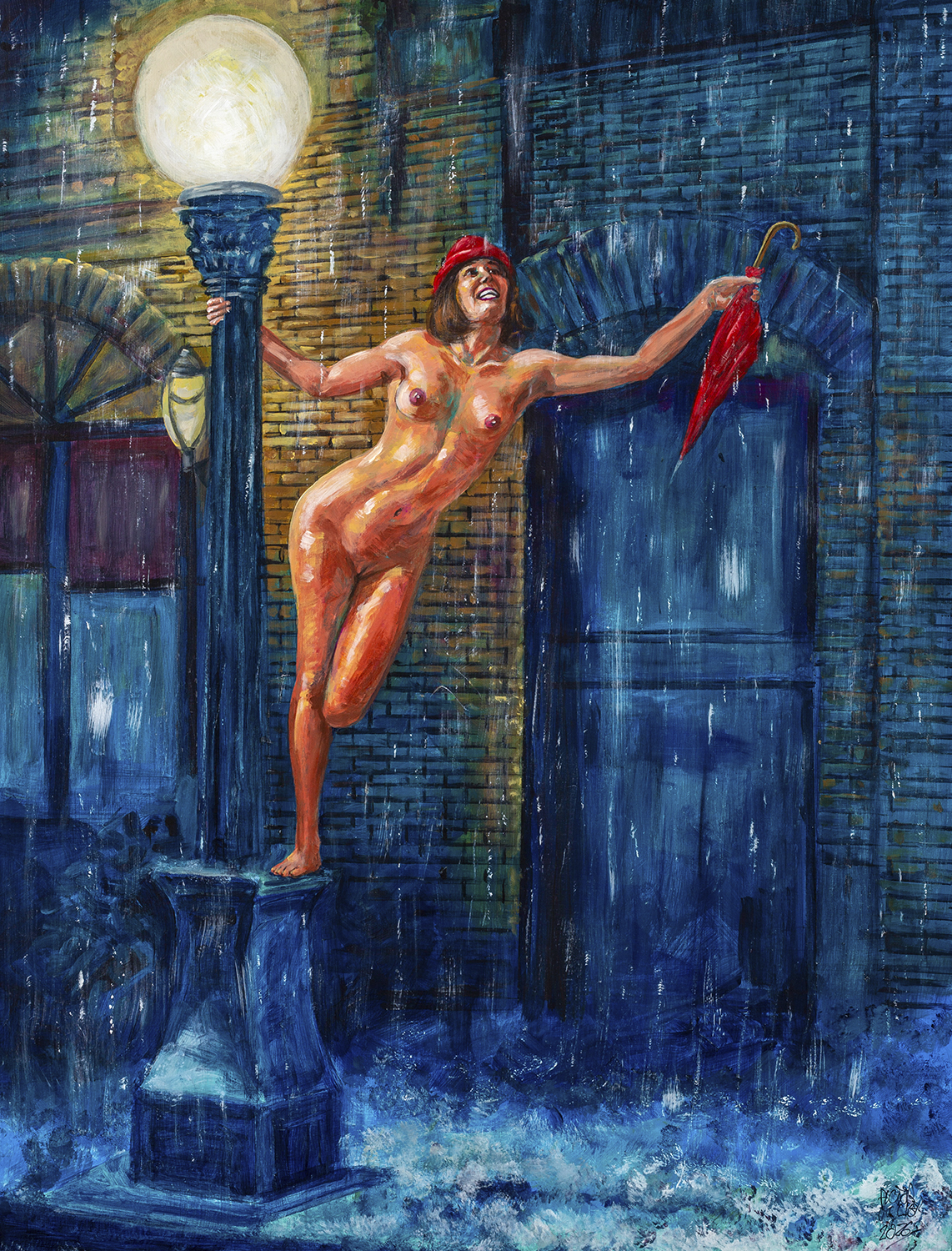
Naked Singing in the Rain
Every time I have watched this absolutely mythical scene from Singin’ in the Rain, and with the utmost respect for Gene Kelly, I have asked myself the same question: what would happen if that same burst of joy, that same carefree and luminous exhilaration, were embodied by a naked woman?
I was not interested in turning the scene into something cynical or vulgar. On the contrary, I wanted to preserve its expansive innocence and shift it toward a free, natural, and uninhibited sensuality.
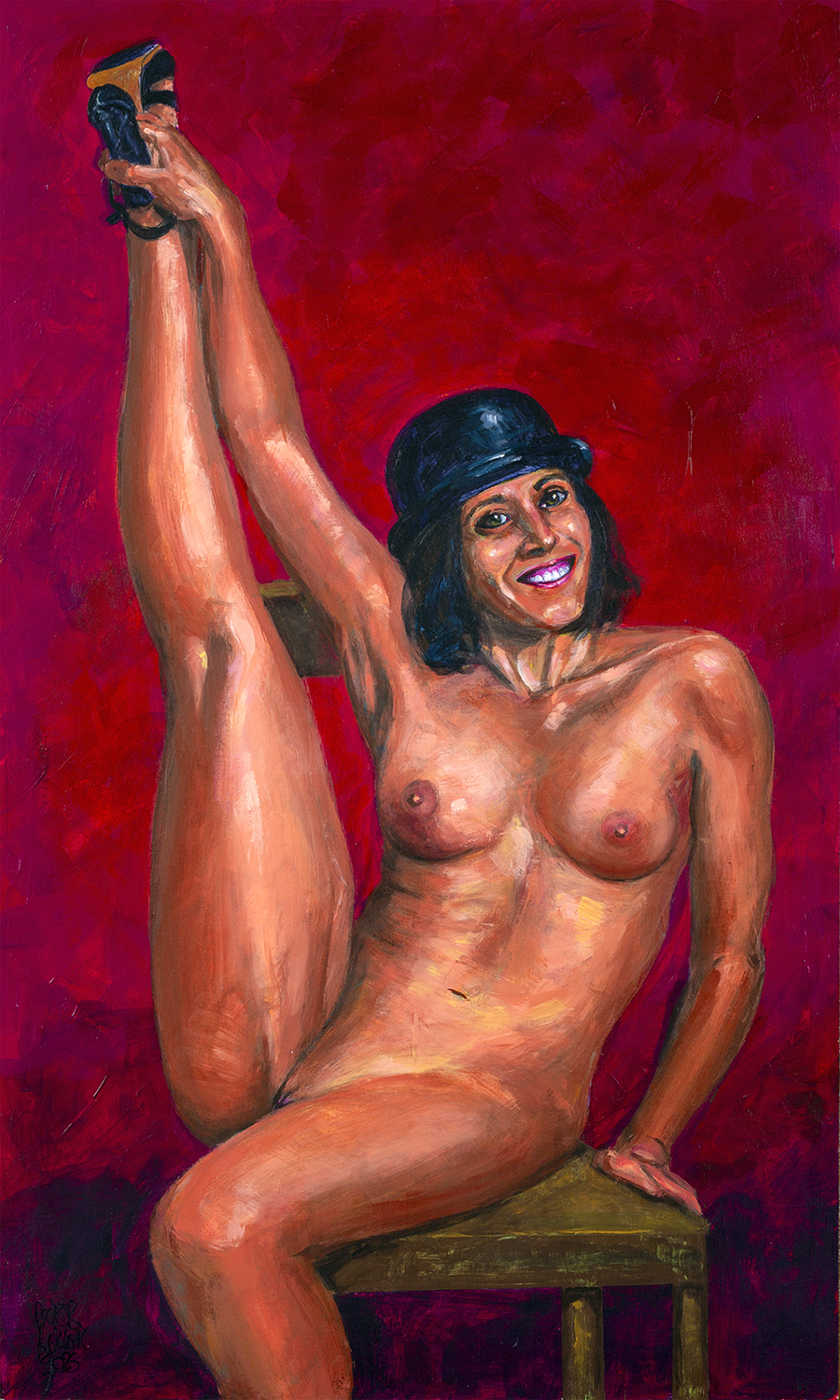
Life is a cabaret
In this case, there is hardly any need to imagine anything, because the world of Cabaret is already charged with desire. It is sensual, theatrical, ambiguous, insolent, radically free, and traversed by a sexual energy that forms part of its own stage pulse.
What interested me was appropriating that atmosphere and pushing it a little further through painting — not illustrating a specific scene, but capturing that climate of artifice, display, and freedom that makes cabaret such fertile territory for my erotic imagination.
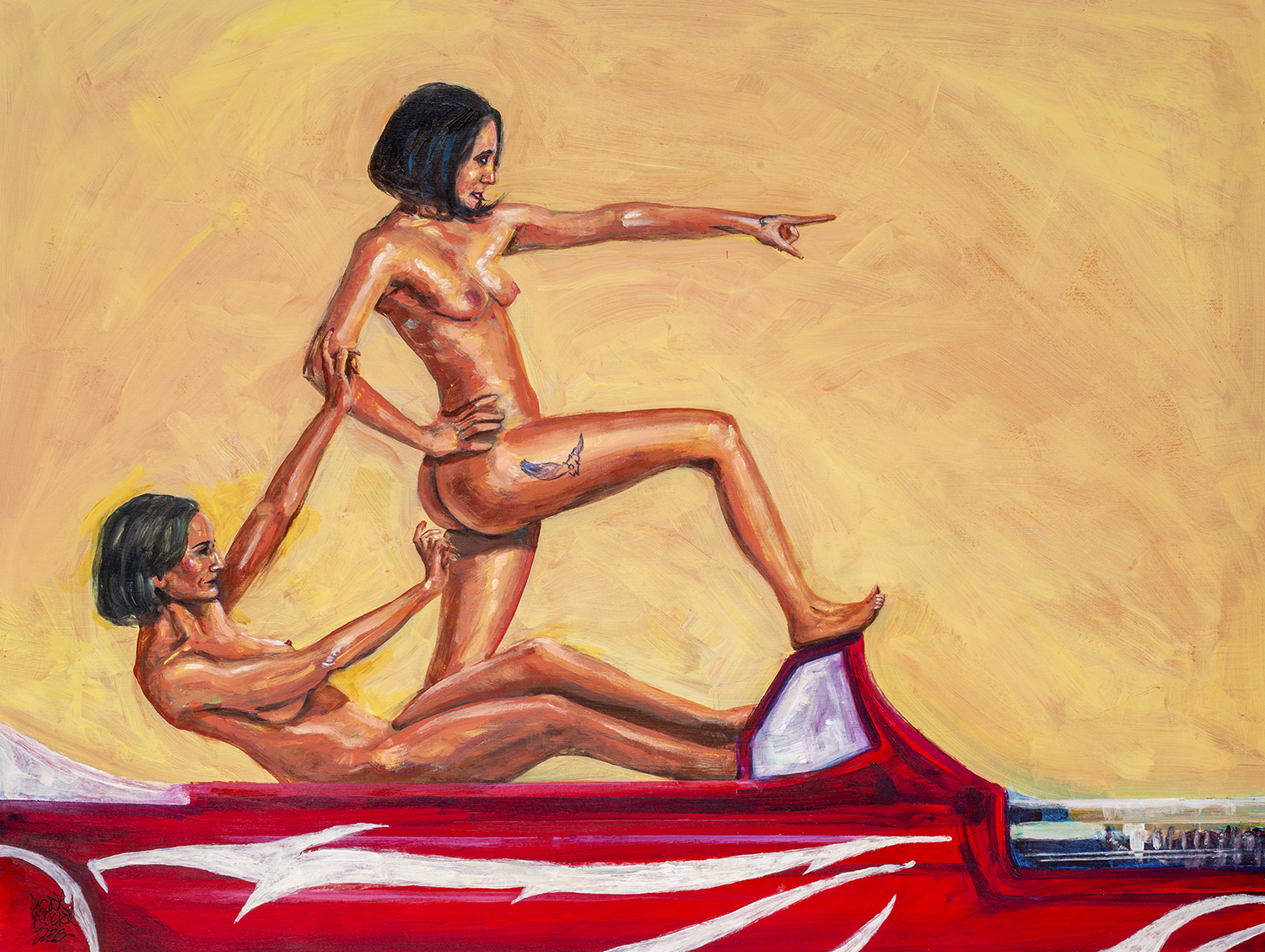
Grease nude lightnin
Here, beyond my affection for the scene itself, there was a very specific impulse: I wanted to appropriate John Travolta’s masculine swagger and transform it into feminine swagger within the painting.
And I use “swagger” in the best possible sense of the word: as affirmation, boldness, and bodily sovereignty. I wanted to transfer that defiant energy to my models, so that the stage gesture would no longer belong to the masculine imaginary, but become a celebration of the female body owning itself.
All That Nude Jazz 1
All That Jazz is permeated by dance scenes that radiate eroticism, especially the sequence Take Off with Us / Air-otica, which inspired this first painting and will continue to serve as an essential source for several of the works I will create over the coming months.
In this film, desire is not something added on top of the choreography: it is embedded within it — in the rhythm, in the muscular tension, in the theatricality, in the spectacle itself. That is what makes it, for me, an inexhaustible mine of images asking to be rethought through painting.
Pulp Nude Fiction
The scene I chose from Pulp Fiction is, in a way, one of the few moments in the film that gives you a pause within its chain of violence, excess, and tension.
I wanted to rescue precisely that moment and transform it into a scene that is slightly cheeky, yes, but also complicit and affirmative — a scene in which the models enjoy not only the viewer’s gaze, but also that of the hinted audience in the background of the painting. Here eroticism blends with humour, play, and the joy of knowing oneself to be watched.
A Collection of Erotic Painting Meant to Be Seen as a Whole
The paintings in Erotic Homage to the Most Emblematic Dance Scenes in Film History are conceived so that each work has its own individual reading, while at the same time, when brought together, they construct a deeper collective reading.
That collective reading proposes a fusion of three arts — cinema, dance, and painting — which intertwine in order to speak about the ways cinema nourishes our fantasies and awakens our desires. Not always through explicit imagery. Sometimes also through suggestion, ambiguity, or that silent rewriting that takes place in our minds when a scene leaves us wanting something more.
This is why the collection does not simply bring together six figurative erotic paintings. It also gathers a narrative, an internal thread, and a reflection on visual memory, desire, and painting’s ability to make corporeal what cinema left suspended in our imagination.
And that is precisely why I believe this series is meant to be contemplated together: only then does it fully unfold its deepest meaning.
View the Full Collection
If you would like to discover the finished works in this series, you can explore the full collection here:
[View Erotic Homage to the Most Emblematic Dance Scenes in Film History]
Curatorial Dossier of the Collection
I have prepared a specific dossier for this collection for galleries, curators, art consultants, and other art professionals.
[Download the collection dossier]