
At a time when capturing images is so easy, so endless, and so cheap, there are women who choose a representation of themselves that is thoughtful and made to endure over time.
In contrast to the immediacy of one photograph after another taken with a phone or a digital camera, there is the possibility of reflecting on how they truly wish to be represented, what image of themselves they wish to offer and, of course, to whom they wish to show it.
They are women who seek to represent themselves through something exclusive, unrepeatable, and unique: a work of art over which they exercise complete control.
An eternal work that represents their intimacy and is created for them.
The desire to see oneself through one’s own gaze
Other people’s gazes create as many different images as there are gazes. Positive, negative, or neutral images. Gazes that judge or interpret without understanding anything.
But what happens when a woman looks at herself? When she decides to see herself in a particular way and wishes to be represented that way?
It is the difference between an imposed image and a chosen image.
An exercise in self-expression and identity.
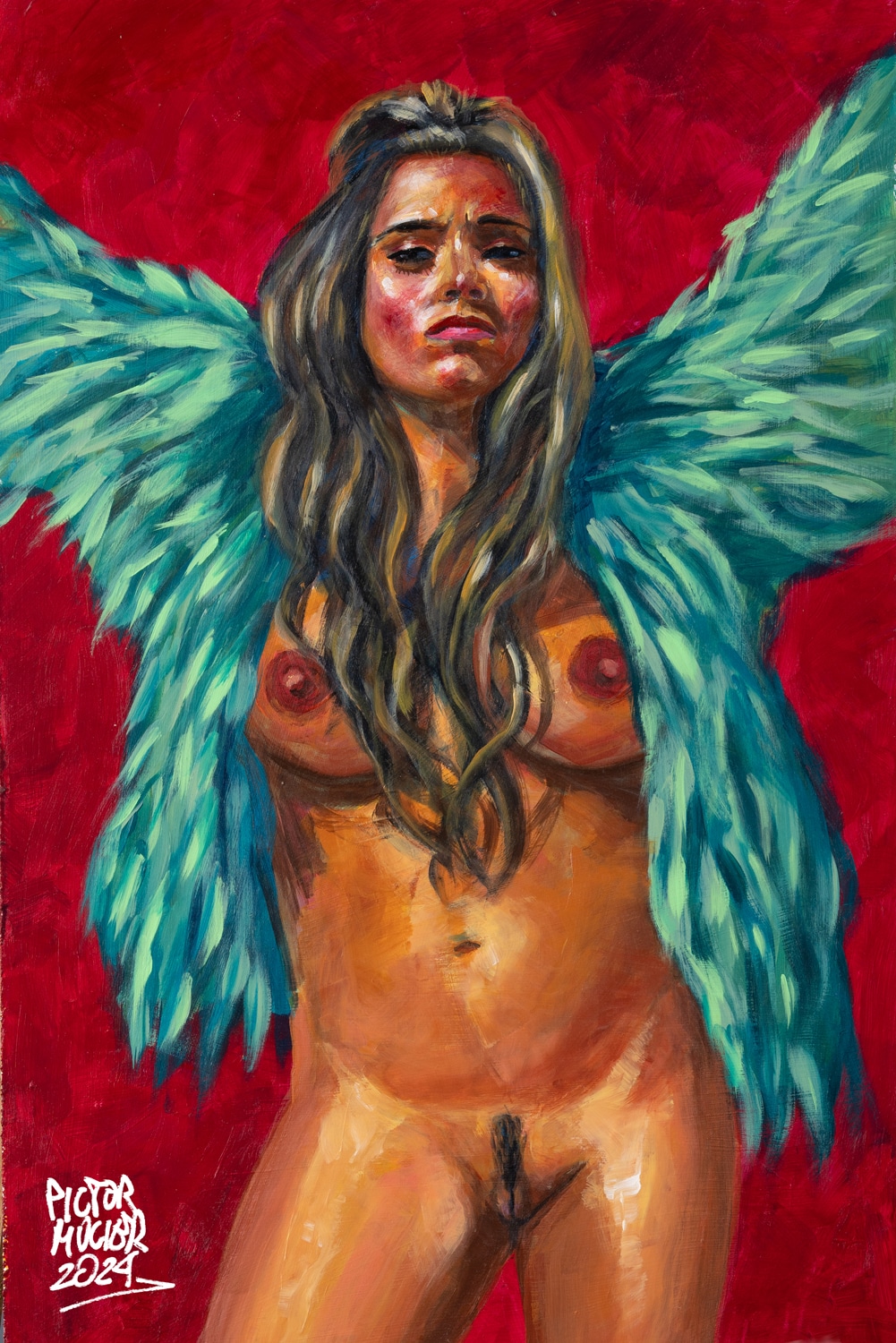
The value of intimacy under one’s own control
Among the chosen images are also intimate ones. Images in which eroticism is the protagonist.
Eroticism does not appear as a concession or as an imposed spectacle, but as a legitimate dimension of identity, sensitivity, and freedom.
Especially in these images, a woman wants to retain control over what is shown, how it is shown, and for whom. It is an act in which the limits of privacy are defined solely and exclusively by the woman herself.
An artistic commission as a gesture of autonomy
When a woman decides to commission a work of art in which she is the protagonist, she is not seeking validation or anyone’s permission. She is seeking to give herself an exceptional gift because it is something exclusive and beautiful.
Something that only she will have. A representation of high symbolic and aesthetic value.
She has chosen for an intimate part of herself to take on a visible, beautiful, and lasting form.
The difference between an ephemeral image and a unique work
Hundreds, thousands of photos and videos from a lifetime that, over time, will be lost, deteriorate, or no longer be recoverable on the devices of the future. In other words, an abundance of which probably no trace will remain.
A work of art, by contrast, a painting, is practically eternal. It is not born to circulate quickly, but to remain. It does not compete with the visual noise of everyday life, but steps away from it. It demands choice, time, presence, and gaze.
That is why a work of art does not merely preserve a body or a gesture. It preserves an intention. It preserves a chosen truth. It preserves the moment in which a woman decided to express herself in a singular way and to turn that decision into something tangible and enduring.
When everything else disappears or is lost, the painting will remain as alive as it was at the moment of its creation, representing something a woman chose to express through art.
What a woman may seek in a commissioned intimate portrait
There is no single reason.
A woman may want a commissioned intimate portrait as an act of personal affirmation.
She may wish to celebrate her beauty at a particular moment in life.
She may want to reconcile with her body in the face of outside narratives that have limited or diminished her.
She may seek an exclusive piece that no one else will ever have. She may wish to leave an artistic legacy.
She may simply want a true representation of herself.
And she does not have to justify it.
Sometimes one seeks a single thing. Sometimes many things are sought at once.
What matters is that the desire does not arise from an external obligation, but from a will of one’s own: the will to see oneself, recognize oneself, and preserve oneself in a chosen way.
A woman may seek one thing or a thousand when she commissions an erotic portrait.

How I approach this type of work
When I create a commissioned erotic portrait, the entire process begins with one fundamental idea: the protagonist defines the limits.
- Confidentiality and respect for privacy are not an added extra, but the foundation of the work. I make sure the commission is real, serious, and respectful, and that there is complete safety for the woman who will be the subject of the painting.
- From there, we define the format of the piece, the atmosphere, the degree of intimacy, the pose, and the overall approach. If the model wishes, I can suggest alternatives and nuances; if she has a very clear idea, my task is to translate it into pictorial language with the greatest fidelity and sensitivity.
- Before I begin painting, I validate the concept of the work with her. During the process, some women prefer to receive images of the progress, while others prefer to wait for the final result. In both cases, the decision is always hers.
- I work on MDF board primed with gesso, paint with acrylics, and once the work is complete, I varnish it and ship it anywhere in the world.
But beyond technique, what matters is this: I do not simply paint a nude. I paint a chosen, intimate, and sovereign image.
For whom this experience makes sense
This experience makes sense for women with aesthetic sensitivity who wish to see themselves represented in a singular, conscious, and deeply personal way.
For women who do not experience the body as a source of shame, but as a territory of expression, presence, and freedom.
For women who value exclusivity and wish to possess a unique work about themselves.
And also for those who want to take their image beyond the literal: to see themselves transformed into a mythological figure, a symbolic character, a historical presence, an aesthetic fantasy, or the embodiment of an intimate part of themselves that rarely finds form in everyday life.
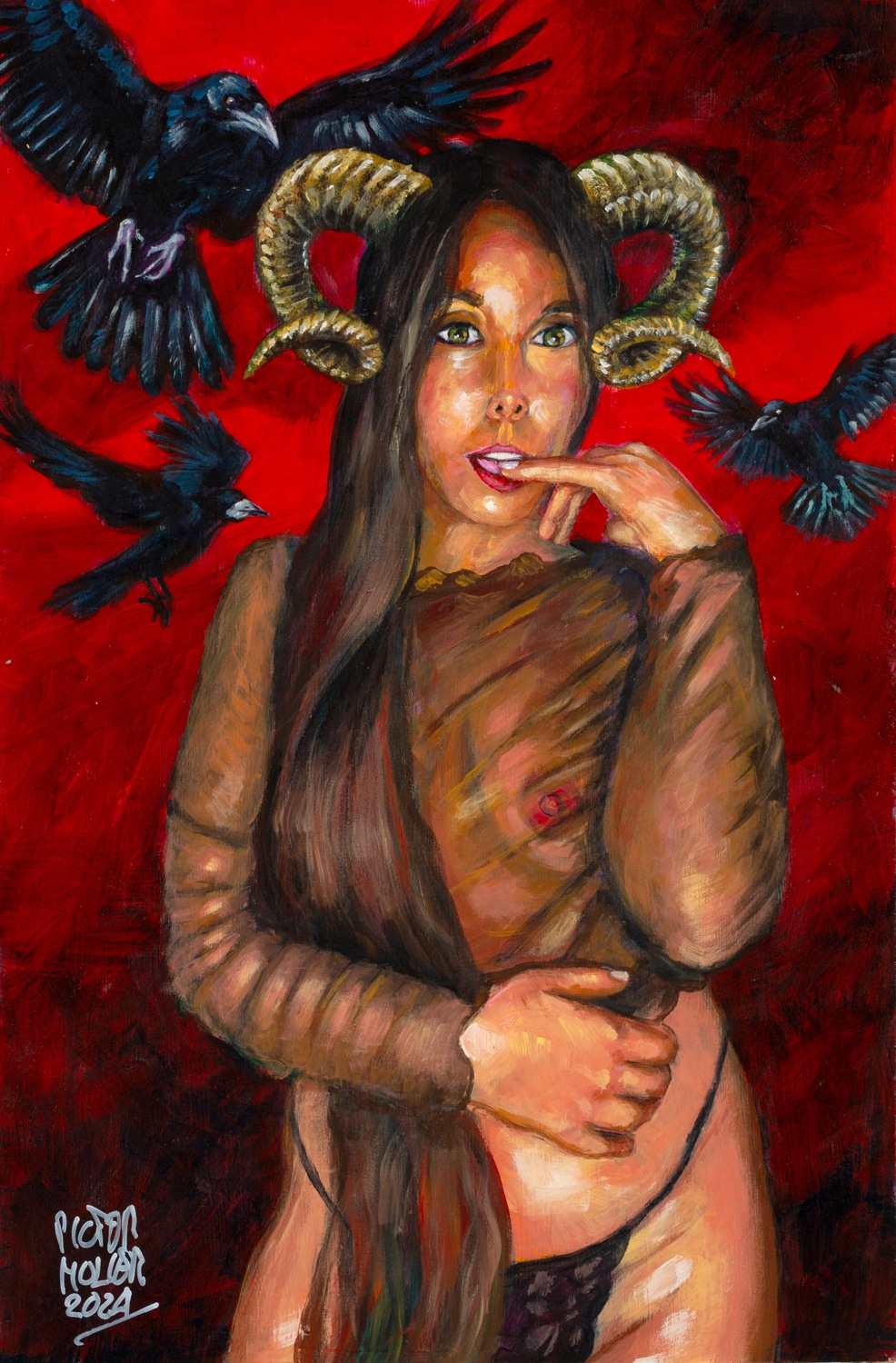
Ultimately, it makes sense for women who desire more than an image: they desire a work of art that makes a chosen truth visible.
Becoming a work of art
There are images that are consumed in seconds. And there are others that remain.
If you desire an intimate, exclusive painting created through your own gaze, you can write to me and take the first step toward turning a part of yourself into a unique and eternal work of art.